
Folder gluer collector scuffing should be investigated by finding the first point where a clean carton becomes marked. Compare samples before the collector transfer, after collection and after packing, while preserving carton orientation and production conditions. Inspect the mark’s location and pattern before changing speed, guides or compression. A scratch seen in a finished bundle may have started upstream, at a transfer contact or during manual handling. The collector cannot be blamed or cleared from a final bundle alone; a staged comparison provides the evidence needed for the next controlled trial.
Describe the damage precisely
Separate a narrow scratch from a broad polished patch, ink rub, crushed edge or adhesive contamination. Use the same lighting and viewing angle when photographing samples because gloss changes can disappear under different illumination. Mark the carton orientation outside customer artwork, or identify it in a separate photograph. Record which face was upward, which edge arrived first and which side faced the operator.
Compare the mark with the approved sample rather than describing it only as minor or severe. A cosmetic defect on a visible display face may be unacceptable even when the carton erects correctly. Conversely, a change in surface sheen may require a different investigation from actual coating removal. The buyer and producer should agree how appearance is inspected and which surfaces are controlled before deciding whether the trial passes.
Use the actual collector as the equipment reference
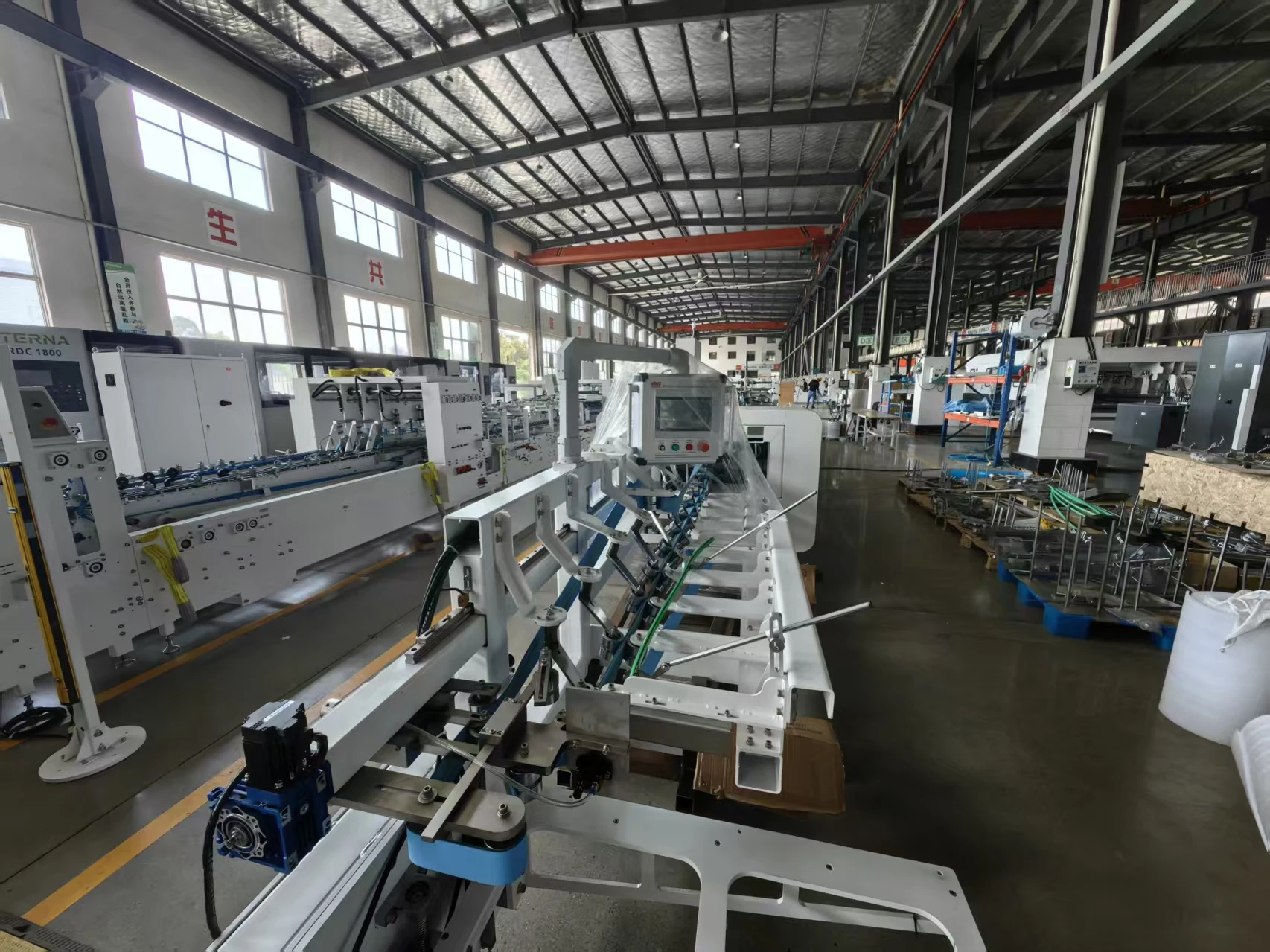
The Realstar RS-FS540A folder gluer collector stacker is presented as a downstream collection and packing machine. The product page includes the machine arrangement, a layout drawing and application photographs. Those images provide context for discussing transfer and packing. They do not prove a particular carton will run without marks or establish a universal setup for coated stock.
Confirm the supplied configuration, interface to the upstream line and the permitted adjustments with the supplier. Ask which supports, guides and conveying components are included in the quotation. A remembered recipe can help repeat a known setup, but it does not establish that the material, coating condition or incoming carton presentation is unchanged. Recalled settings still need the agreed first-off inspection.
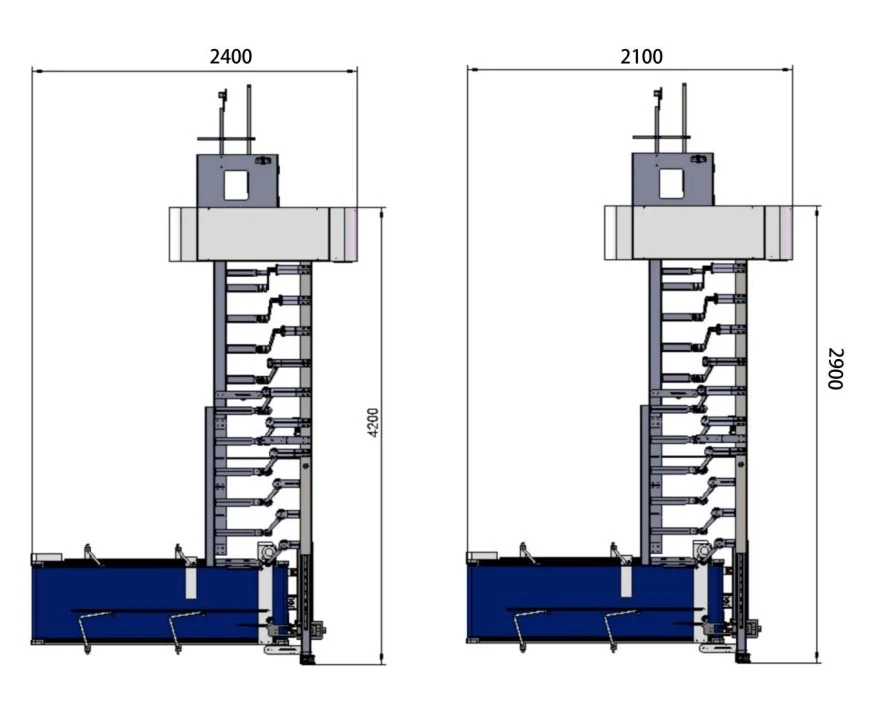
Establish where the mark first appears
Collect labelled samples at safe, approved observation or sampling positions. The useful comparison is between cartons immediately before the collector, after the collector and after final packing. Sampling must not require reaching into moving belts, nips or transfer mechanisms. Arrange a manufacturer-approved collection method and stop procedure where direct access is not permitted. A safe sampling plan should be agreed before the trial starts.
If marks already exist before the collector, investigate the upstream process separately while maintaining the comparison record. If the incoming sample is clean and the collected sample is marked, the collector or its transfer interface becomes a stronger suspect. If only packed samples show damage, compare the packing surface, bundle handling and any banding operation. These observations narrow the search; they do not identify a specific worn component by themselves.
Inspect material and surface condition
Retain information on board grade, print, coating or laminate, adhesive system and relevant drying or curing release. Ask the material and print suppliers how the surface should be assessed for its intended handling conditions. Do not declare a coating fully cured from elapsed time alone, and do not use a solvent rub or abrasive test unless it is part of an approved procedure with defined acceptance criteria.
Compare suspect production with an accepted reference batch if one is available. A clean reference carton running through the same approved setup can help identify material sensitivity, although changing the material also changes the trial conditions. Record that difference explicitly. Where only a particular artwork area is affected, consider both the contact location and the surface construction rather than assuming that the color itself explains the damage.
Map the mark without touching the running line
A repeated line at a consistent carton position suggests checking the corresponding contact path when the equipment is safely accessible. Broad marks or changes that appear only during bundle removal require a different comparison. Record the pattern across multiple samples and note whether it remains at the same location relative to the carton or the machine. This distinction is useful when cartons can be fed in different orientations.
Take photographs of accessible equipment only under the site’s permitted procedure. Do not lean over guards or put a ruler against a moving conveyor to compare positions. Measurements and cleaning inside a hazardous area belong to the authorized safe-access process. The NIOSH energy-control resource explains the need to control hazardous energy during servicing and maintenance.
Build a focused trial matrix
The following qualitative table helps define separate investigations. It supplies no numerical pressure, speed or guide-clearance limits. Those values must be agreed for the exact equipment, carton construction and surface finish.
| Observation | Comparison to make | Evidence for the next step |
|---|---|---|
| Marks exist before collection | Upstream and collector-entry samples | Locate the earlier operation before adjusting the collector |
| Clean entry but marked collected cartons | Matched samples at the approved transfer points | Review transfer contact and setup with the supplier |
| Marks appear only after bundle removal | Collected and packed samples | Review packing surface and handling sequence |
| Only one board or coating batch marks | Accepted reference and suspect batch | Ask the material supplier to review surface readiness |
| Mark changes with carton orientation | Labelled orientation trials where permitted | Distinguish carton position from machine contact position |
| Damage returns after a restart | Stable-run and restart sample groups | Review transition conditions and recipe verification |
Retain both acceptable and rejected cartons for each trial condition. A photograph of the best carton is insufficient evidence for a process that produces intermittent damage. Select samples through the agreed run and record how they were chosen so that the inspection cannot silently favor the cleanest section of the batch.
Separate alignment from surface damage
Check whether cartons arrive consistently aligned, overlap as intended and remain supported through the approved transfer path. Poor presentation can change contact, but a neat final stack does not prove that every carton passed through without rubbing. Assess the face condition and the stack condition independently. If the box itself is skewed before collection, a downstream cosmetic adjustment may leave the underlying folding problem unresolved.
The FEFCO converting equipment technical specifications distinguish offset and rotation when describing corrugated-sheet stack alignment. That is useful vocabulary for a comparison record. The document’s corrugated-sheet measurements are not acceptance limits for this folding-carton collector, and no FEFCO tolerance is asserted here. Agree carton-specific measurement and appearance requirements with the supplier.
Change one permitted condition at a time
Start from the documented approved setup. If the supplier authorizes a speed comparison, retain the same material and record the actual operating condition for each sample group. If guide or transfer adjustments are required, make them only through the model-specific safe procedure. Avoid changing guide position, conveying condition and packing method together; a better final bundle would then conceal which intervention helped.
Check whether an apparent improvement survives a repeated run and a normal restart. A trial that produces clean cartons only during steady flow may still have transition losses. Record stoppage reasons and the disposition of cartons around those events. Do not extrapolate a short clean demonstration into a guaranteed waste rate for an entire shift, or claim that a slower condition is commercially acceptable without the agreed output requirement.
Check packing and banding as separate stages
Use a clean, suitable packing surface and inspect cartons before combining them into a bundle. Follow the authorized handling method and avoid dragging decorated faces against rough surfaces. Keep gloves and other handling materials consistent with the product’s cleanliness requirements. A glove is not automatically a solution if it carries dust, adhesive or abrasive contamination from an earlier task.
If the line includes film banding, compare cartons before and after that step. The PE film banding guide covers a separate bundle trial. Likewise, use the collector capacity article when evaluating output and staffing. Capacity and cosmetic acceptance should be recorded together, because increasing throughput is not useful when the resulting cartons fail appearance requirements.
Keep access and cleaning controlled
Belts, rollers and transfer areas can expose workers to trapping or crushing hazards. Stop production when unsafe conditions arise and use the site’s approved process before accessing a hazardous zone. The emergency stop is an emergency control, not a substitute for the required isolation and verification steps. Cleaning chemicals, tools and replacement parts should be approved for the machine and material rather than improvised during a running trial.
The following WorkSafeBC educational video discusses guards and lockout in manufacturing. It supports the maintenance-access section and does not demonstrate this collector, certify its guarding or provide model-specific cleaning instructions. Operators need the actual supplier manual and training. The inspection process above remains complete without watching the video.

WorkSafeBC: guards and lockout in manufacturing.
Ask for a meaningful supplier demonstration
Send finished cartons representing the most demanding surface and shape in the intended order range. Include the approved visual sample, planned packing arrangement and the upstream machine interface. Ask the supplier to demonstrate sample collection at the agreed inspection stages. A trial record should identify the actual tested material and configuration, including any intervention needed to maintain acceptable appearance.
Write down which face defects cause rejection, how lighting and comparison samples are controlled, and what happens when a defect reappears. Preserve the photographs and physical sample set with the order. The Realstar machinery blog is a useful starting collection for adjacent processes, while the job-specific acceptance record should govern the purchase and production release.
Frequently asked questions
Does a scratch in a packed bundle prove the collector caused it?
No. Compare labelled samples before collection, after collection and after packing using a safe approved sampling method. The first stage where the defect appears is the useful starting point for investigation.
Will reducing collector speed always remove scuffing?
No. Material readiness, contact condition, carton presentation and handling can all need investigation. Any authorized speed trial should hold other conditions stable and verify both appearance and the required output.
Can stack alignment replace cosmetic inspection?
No. A well-aligned stack can still contain marked cartons. Inspect stack presentation and the required carton faces separately using the agreed sample and appearance criteria.