
Folder gluer collector capacity should be evaluated as accepted cartons delivered to the next packing operation, not simply the maximum conveyor speed. The collector must handle the actual carton size, thickness, finish, batch arrangement and operator workflow while maintaining quality. Before buying a faster folder gluer or adding collection equipment, measure where cartons wait, where the line slows and how many good cartons leave the packing area. This guide explains a practical capacity calculation, the limits of that calculation, and a trial checklist for matching a collector to an existing line without assuming that a headline speed equals sustainable production.
Locate the constraint before specifying equipment
Observe a representative job from the gluer discharge to the completed shipping pack. Mark each point where cartons accumulate, change direction, are counted or are lifted. Record why the upstream machine slows: collection, inspection, packing material supply, banding, case sealing or another cause. A collector can improve the handoff from the gluer, but it cannot automatically remove a separate constraint farther downstream. Investigate the whole route before assigning the problem to one machine.
Use more than the easiest straight-line carton. Include the formats that consume the most production hours and the jobs that cause the most stoppages. Note whether products are handled in single or multiple rows, their delivery orientation and how the operator separates a batch. Keep the carton drawing and material specification with the observation. Similar external dimensions do not guarantee similar handling when folded thickness, flap arrangement or surface finish differs.
The Flexographic Technical Association’s folder/gluer purchasing discussion points out that increased upstream speed can move the bottleneck to case packing or banding. Use that principle to define the trial boundary. A capacity claim measured only at the collector’s entrance says little about the quantity your team can inspect and pack at the end of the line.
Keep speed, pitch and quantity in separate units
Linear speed is a distance per unit time. Carton output is a quantity per unit time. Converting one to the other requires the effective pitch at the measurement point, plus the number of productive lanes. Pitch means the distance between equivalent points on successive products in the direction of travel. It is not automatically the unfolded blank length or the finished box length. Overlapped products and changing separation patterns need particular care.
For a stable, evenly spaced stream, the geometric quantity rate is: cartons per minute = conveyor speed in metres per minute divided by pitch in metres, multiplied by productive lanes. For example, 60 metres per minute divided by 0.30 metres per carton gives 200 cartons per minute in one lane. Multiply by 60 to obtain 12,000 cartons per hour. This is an illustrative calculation, not a performance specification for any Realstar machine.
The calculation assumes continuous movement, stable pitch and no rejected cartons. It does not include setup, replenishment, interruptions or handling limits. Do not apply it across a collection section where layers are deliberately compressed or accumulated unless the measurement method accounts for that behavior. If pitch cannot be measured reliably, count cartons over an observed interval instead. A direct count with a clear time boundary is better than a precise-looking number based on the wrong geometry.
Measure net accepted output directly
Define the observation period and count accepted cartons at the agreed endpoint. Divide that quantity by elapsed hours. Separately record rejected cartons, reworked cartons and work still waiting between stations. If you count only what enters the collector, a growing queue may hide a packing limitation. Start and end the observation with comparable work-in-process conditions, or record the change explicitly so the result can be interpreted.
Suppose 10,800 accepted cartons are packed during a 1.5-hour observation. Net output is 7,200 accepted cartons per hour. If a short burst at the machine exit appears much faster, both observations can be true: they measure different boundaries. Record whether the longer observation includes ordinary replenishment and planned checks. For shift planning, also account for activities outside the observation rather than treating the measured interval as a guarantee for every hour of the day.
Build the compatibility worksheet
The following worksheet is a proposed purchasing aid. Populate it with actual job data and confirm limits with the supplier for the specific configuration. Do not combine the maximum values from several machine models into an imaginary configuration that no supplier has offered.
| Input | Information to provide | Trial evidence required |
|---|---|---|
| Carton geometry | Folded dimensions, style and orientation | Stable transfer on representative formats |
| Material | Board grade, thickness and surface finish | No unacceptable marking or deformation |
| Delivery pattern | Lanes, overlap and pitch where measurable | Consistent collection without repeated intervention |
| Batch handling | Count, layer arrangement and packing method | Counts reconciled with physical batches |
| Upstream interface | Discharge position, speed control and stop behavior | Agreed coordinated start and stop test |
| Downstream work | Inspection, banding, case packing and replenishment | Accepted output measured at the final boundary |
| Site arrangement | Floor space, access and material routes | Layout reviewed by operations and safety staff |
Match the collector to the actual product mix
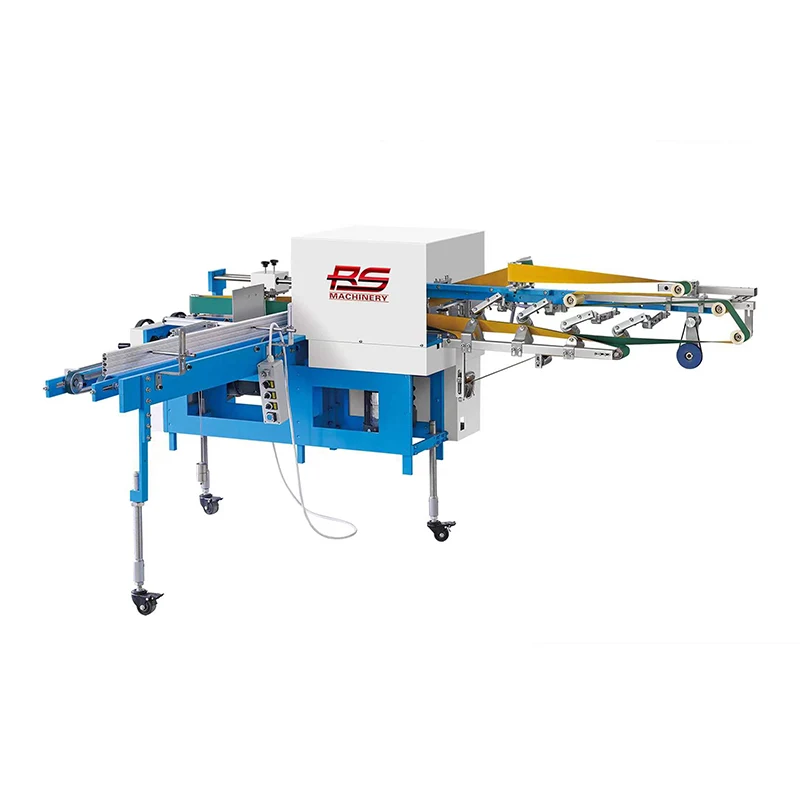
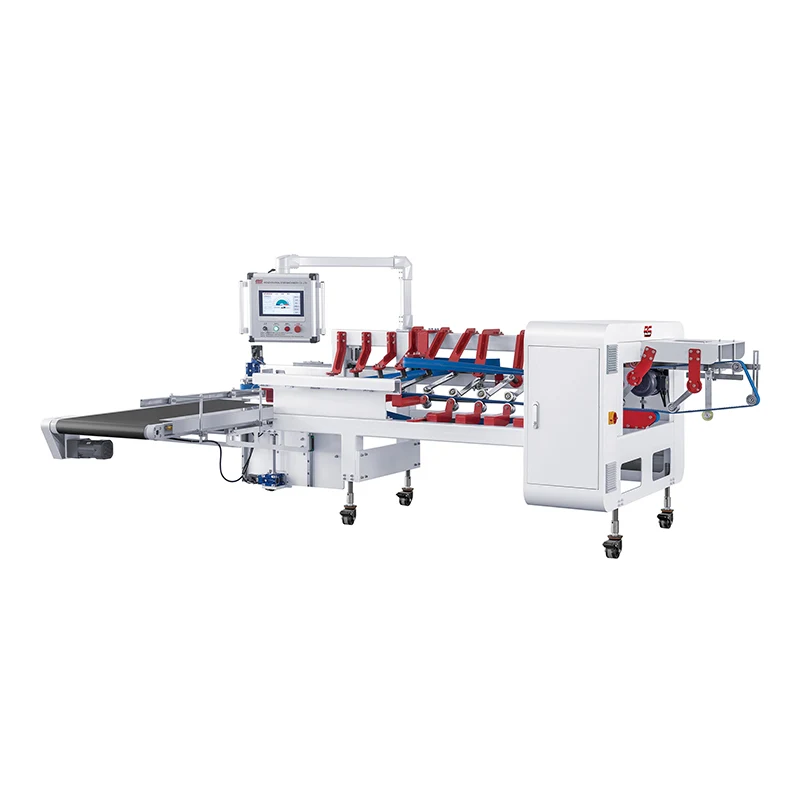
Realstar’s RS-FS540A folder gluer collector stacker is presented with recipe storage and adjustable collection arrangements. Ask which configuration is appropriate for your cartons and which adjustments are required between them. A saved recipe can support repeatability, but it should still be tied to a specific job revision, material and approved sample. Confirm how an operator identifies the correct recipe and verifies the first accepted batch.
Review the folder gluer collector range when comparing layouts and handling approaches. Explain whether your objective is reducing interruptions, improving batch presentation, accommodating a new carton style or changing the packing arrangement. These objectives may lead to different choices even when two buyers ask for the same nominal output. Request a configuration-specific proposal rather than using a general product page as the complete purchase specification.
Check quality at the handoff and after collection
Inspect cartons before the collector and again after the normal packing action. Look for damage that appears only after transfer, stacking or lifting. Retain samples with their position and time identified. If a carton was already misfolded at the gluer exit, changing the collector will not correct that upstream defect. Conversely, an acceptable carton that becomes marked during collection requires attention to the handling stage and its approved setup.
The Australian training unit Set up and operate folder gluer machine connects throughput with spacing, folding, stacking and output inspection. It is a training reference rather than a capacity certificate. During your trial, keep the finished-carton quality decision attached to the output figure so a faster but unacceptable run is not recorded as an improvement.
Count accuracy also needs a physical check. Compare indicated quantities with sampled batches using the agreed verification method. Review how rejects, interrupted batches and restarts are handled. Decide how an incomplete batch is identified and whether it can be mixed with a complete one. A reliable handoff requires both physical presentation and traceable quantities; a tidy stack does not establish that its count is correct.
Include operators and packing materials in the trial
Specify the number of people, their tasks and the normal supply arrangement for cases, bands or film. Avoid judging a proposal from a demonstration with extra helpers performing unrecorded work. Observe reaching, lifting and walking as well as machine motion. Ask the site team to review access and ergonomics for the intended staff and layout. Do not infer an acceptable repetitive handling load from a machine’s maximum product size.
Include a representative replenishment event and an approved stop and restart. Record what happens to cartons already between machines. Check who is responsible for clearing an interrupted batch and confirming that the line can restart. These details often determine practical continuity more than a brief peak-speed run. Identify the tasks that remain manual in the final proposal so labor planning is based on the real workflow rather than a promotional description.
Agree interfaces and safe recovery procedures
Confirm responsibility for mechanical alignment, controls integration and protective measures between the gluer and collector. A physically compatible conveyor is only one part of integration. The supplier and site team should define the permitted start, stop and recovery behavior for the assembled line. Any modification to the existing equipment should be reviewed by the responsible qualified parties. Operators should never have to improvise an unsafe intervention to maintain the quoted output.
The WorkSafeBC training below provides general background on controlling hazardous energy during servicing. It is relevant to conveyor jams and maintenance access, but it is not an instruction to modify the equipment or bypass safeguards. Use the manufacturer’s procedures and the applicable workplace requirements for the actual installation.
General manufacturing-safety training by WorkSafeBC. Watch on YouTube.
Compare proposals using a common acceptance run
Give each supplier the same representative jobs, quality criteria and counting boundary. State which routine activities must be included in elapsed time. Ask for a trial record showing accepted output, rejects, stoppages, intervention reasons and staffing. If a result depends on an optional accessory, identify that accessory in the quotation. If a particular carton has not been tested, keep it outside the accepted performance claim until suitable evidence is available.
Record changeover separately. Measure from the agreed stopping point on the previous job to accepted output on the next job, with the included cleaning and tooling tasks stated. A plant with frequent short runs may value repeatable changeovers more than a higher peak rate on one long run. Compare the expected job mix rather than assuming that the highest catalogue speed must provide the best overall production result.
For an upstream constraint in blank separation, see die cutting, stripping and blanking. If laminated cartons develop surface problems before collection, use the thermal lamination troubleshooting guide to separate material defects from handling damage. Bringing those observations into the inquiry helps Realstar assess the intended line rather than selecting equipment from an isolated output target.
Frequently asked questions
Can metres per minute be converted directly into cartons per hour?
Only when effective pitch and productive lane count are known and stable. Even then, the result is a geometric rate that excludes stops and quality losses. Confirm practical output by counting accepted cartons over an agreed period.
Does a faster collector guarantee faster shift output?
No. The constraint may be inspection, packing, banding, material supply or another station. Measure the complete route and confirm that the proposed change addresses the actual limiting step.
What should a supplier trial report include?
Include the carton and material identification, machine configuration, staffing, elapsed time, accepted quantity, rejects, interruptions, batch checks and changeover result. State the conditions and formats that were not tested.