
Slitter rewinder core selection starts with the interface between the core, the machine’s shaft or chuck, and the finished roll required by the customer. Check dimensions, condition, strength and the actual gripping arrangement together. A nominal core size alone does not establish compatibility, and extra winding tension is not a reliable correction for a damaged or poorly matched core. This guide proposes a purchase and receiving inspection process for paper and label converting. Final dimensions, loading limits, operating settings and rejection criteria must come from the approved machine and core suppliers for the actual application.
Treat the core as a process component
The core supports the wound material and connects it to the machine. It must work during mounting, winding, stopping, unloading, transport and the customer’s subsequent use. A core that looks acceptable on the receiving bench may still be unsuitable for the intended shaft, roll mass or handling route. Specify the complete duty rather than buying solely by price or the nominal diameter printed on a delivery note.
The Confederation of Paper Industries hosts an industry paper handling and logistics guide that treats cores as part of the operating system, including their role in support and torque transmission. The guide covers broader paper handling applications. Its examples and dimensions are not Realstar machine ratings.
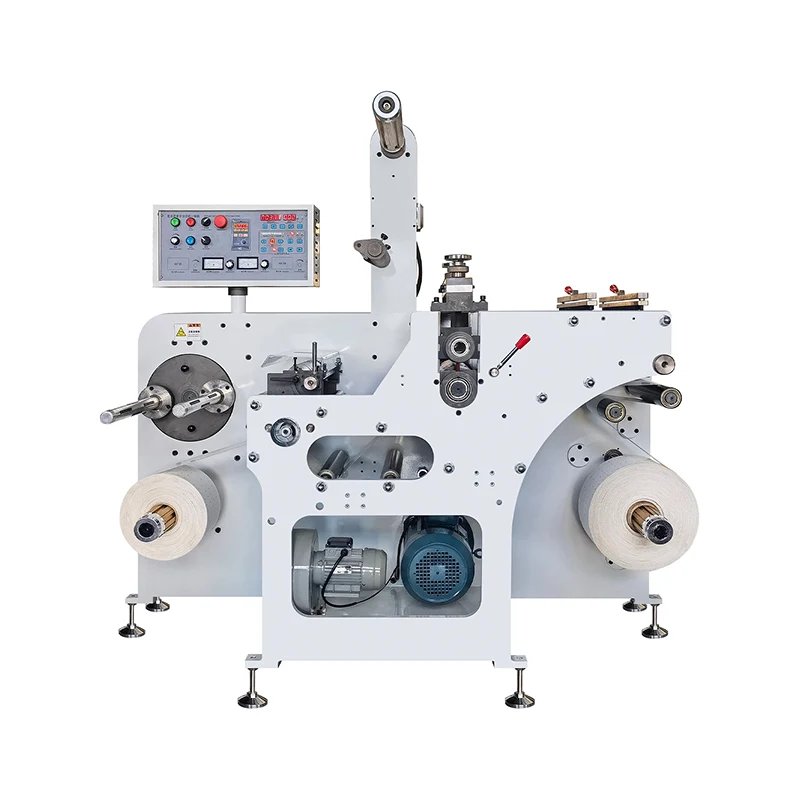
For an equipment discussion, start with the Realstar RS-350FG slitting and rewinding machine. Ask for an order-specific statement of the unwind and rewind interfaces, permitted core range, roll limits and handling requirements. Do not assume a configuration from a photograph of a similar machine.
Separate unwind and rewind requirements
The parent roll and the finished rolls may use different interfaces. Document them separately. On the unwind side, record the incoming roll specification, core dimensions and condition expected from the material supplier. On the rewind side, record the finished roll specification and the receiving customer’s mounting requirements. A core accepted by your rewinder is not automatically accepted by the customer’s next process.
Include actual internal diameter, external diameter, length, wall construction and relevant supplier tolerances. State the measurement method and where the measurements will be taken. Identify whether the application uses a through shaft, end chucks or another approved arrangement. Different gripping systems contact different parts of the core, so the condition of those contact surfaces matters.
If adapters are proposed, require written approval for the complete combination. Confirm how the adapter affects permitted loading, available working width and the core engagement arrangement. An improvised sleeve or packing strip is not a substitute for an engineered interface, even if it appears to remove movement during a stationary demonstration.
Build a receiving inspection that finds useful differences
Sample cores from identified cartons or pallets and retain the delivery lot information. Inspect ends, bore and outer surface before mounting. Look for crushed edges, delamination, moisture damage, contamination and obvious distortion. Record the defect location with a photograph and a scale reference. Keep suspect material separate until the supplier or responsible engineer decides its disposition.
Measure according to an agreed procedure rather than forcing an out-of-round core into a single diameter reading. If readings vary with position or orientation, preserve that pattern. The purpose is to identify whether the delivered parts meet the approved drawing and interface, not to invent a new tolerance at goods receipt. Use suitable checked instruments and document any uncertainty that affects the decision.
| Inspection item | Question for the supplier | Receiving or trial evidence |
|---|---|---|
| Internal diameter and shape | What dimensions and variation suit the approved shaft or chuck? | Recorded readings using the agreed locations and method |
| Core length and cut ends | How much engagement and positioning space are required? | Length record and photographs of both ends |
| Wall construction and strength | What construction suits roll mass and operating duty? | Supplier specification linked to the intended application |
| Bore and end condition | Which damage requires rejection for this gripping system? | Defect photographs and written disposition |
| Storage and traceability | How should the lot be protected and identified? | Batch labels, storage record and segregated suspect stock |
| Customer interface | Will the finished core mount on the next process? | Customer drawing and witnessed mounting confirmation |
This is a proposed inspection checklist. Numerical limits belong on the approved specification. Do not copy core dimensions or safe operating limits from a different press, rewinder or paper handling example.
Establish a mounting baseline safely
A competent person should check compatibility using the machine manufacturer’s procedure with the roll and shaft properly supported. Do not hold a heavy shaft in one hand while attempting to fit cores with the other. Plan the lifting and support arrangement before the trial, including where components will rest and how people will remain outside trapping zones.
The HSE guidance on rewinding paper safely addresses access, moving machinery and roll-handling hazards. It supports the need for a controlled system of work. It does not provide a universal mounting instruction for every machine. Follow the installed machine manual and local risk assessment, including isolation and control of stored energy when access is required.
Check that the core can be positioned and retained in the intended location without unauthorized modifications. Record whether the fit is consistently acceptable across the sampled lot. If only selected cores fit, treat that as a supply or specification issue requiring investigation, rather than approving the shipment from the best specimen.
Compare stationary fit with operating performance
Once the interface and safety checks pass, run a documented trial using representative material and a supplier-approved operating recipe. Record the core lot, material lot, finished width, roll target and machine configuration. Observe from protected positions. Never place reference marks or measuring tools on moving shafts, cores or rolls.
Assess the finished product against the agreed criteria. Include whether the core remains intact, whether the roll can be removed using the approved method and whether the next process can mount it correctly. A visually neat roll is only one outcome. Hidden bore damage or difficulty during removal can make a seemingly successful winding trial unsuitable for production.
Investigate any suspected slip, crushing or distortion before raising tension. These observations can have several causes, including material behavior, winding settings and the mechanical interface. Use a controlled comparison with an approved core lot if the supplier agrees. Change one condition and retain the corresponding rolls so cause and effect remain distinguishable.
Keep roll defects and core defects connected but distinct
A core issue may appear alongside uneven winding, but the presence of one does not establish the cause of the other. Use the separate slitting and rewinding telescoping guide for side displacement of wound layers. Keep the core inspection results beside the roll observations so the investigation does not overlook either part of the system.
Similarly, trim problems belong to a different process path. The slitter rewinder edge trim removal guide addresses waste routing. Do not add tension to overcome an obstructed trim route or use a core change to explain a defect that first appears at the slit edge. Locate the earliest visible problem and pursue the relevant branch.
For the broader upstream label conversion sequence, see the label matrix stripping investigation. Establish whether damage first appears during conversion or winding before blaming the finished core.
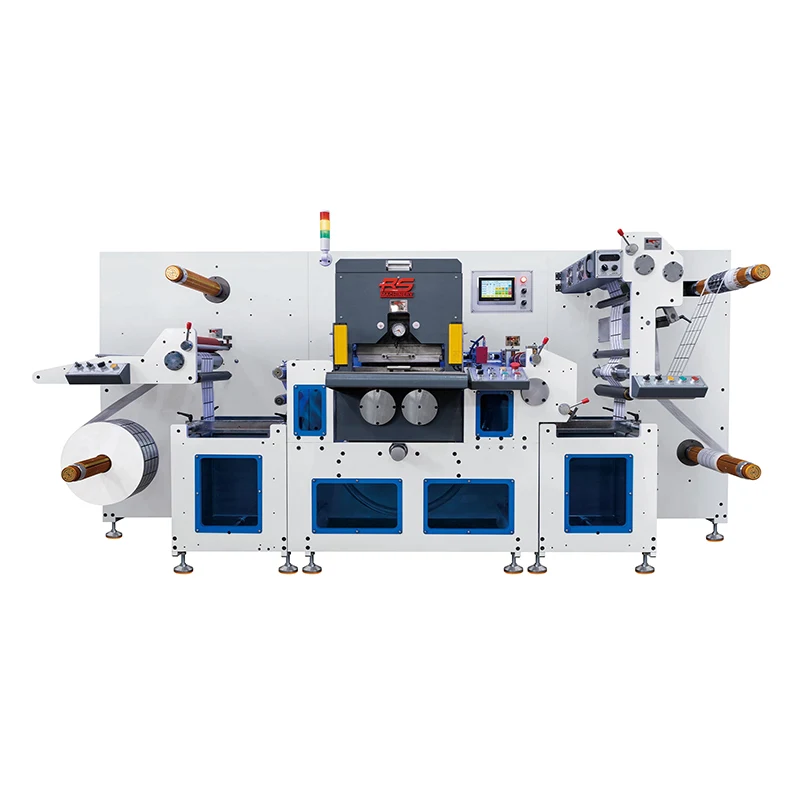
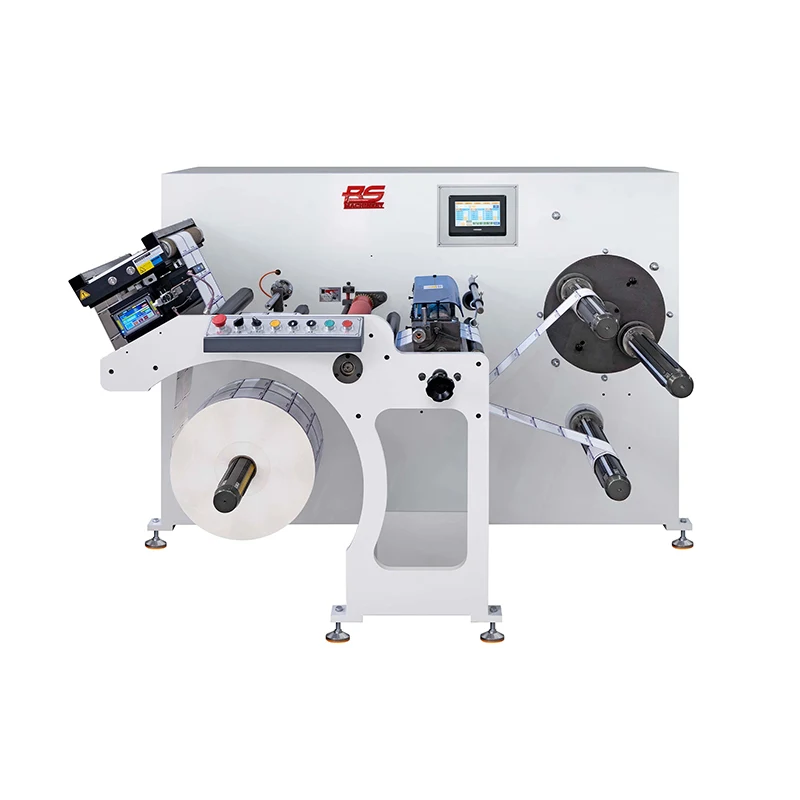
Related equipment photographs illustrate different converting arrangements. They are not evidence that accessories, shafts or cores interchange between models. When comparing an integrated die-cutting line with a standalone rewinder, ask each supplier to identify the precise interface and included equipment.
Include stops, unloading and the next process
A short continuous run can miss the conditions that cause trouble. Agree how the demonstration will include ordinary stopping and restarting, roll completion, unloading and a representative subsequent mounting operation. These events should follow the approved operating procedure. Do not introduce an emergency stop test without the manufacturer’s planned test method and competent supervision.
Label every retained roll with its trial identity. Inspect the core after unloading and, where practical, after the next process. Document any change in bore condition or end damage. If a core is reusable under the supplier’s specification, define the inspection and rejection rules for reuse; do not assume that a previous successful run guarantees another safe cycle.
Train the team around guarded observation
The following WorkSafeBC video covers manufacturing guards and lockout. It is relevant when investigating a core interface because a stationary-looking shaft can still be associated with stored energy or unexpected motion. The video supplements training and does not replace the operating manual or authorize access inside the machine.
WorkSafeBC: guards and lockout in manufacturing.
Design the observation plan so routine quality checks happen outside dangerous areas. If an important condition cannot be seen safely, ask the machine supplier to propose an approved inspection method. Production pressure is not a reason to inspect a rotating interface by touch or bypass a guard for a closer view.
Write a purchase specification both suppliers can answer
Send the machine supplier and core supplier the same drawing, roll duty and trial plan. Ask each to confirm compatibility in writing. Include the receiving customer’s requirements, permitted core materials, intended storage conditions and proposed delivery identification. Clarify who supplies the approved cores for acceptance testing and what happens if production deliveries differ from those samples.
Make the final approval specific: machine configuration, core specification, material range, finished roll requirements and witnessed trial conditions. Keep deviations and unresolved findings visible. This gives purchasing a repeatable basis for ordering and gives operators a clear reason to hold a suspect lot rather than trying to make it work through undocumented adjustments.
FAQ
Is nominal core diameter enough to order replacement cores?
No. Confirm the approved dimensions and variation, length, construction, condition, gripping arrangement and operating duty. The finished roll must also fit the customer’s next process.
Can winding tension compensate for a loose or damaged core?
Do not use tension as an improvised correction. Stop and investigate the interface under the approved safe procedure. The machine and core suppliers should establish whether the supplied parts and operating recipe are compatible.
Should cores be approved only after a winding trial?
Use both receiving inspection and an operating trial. Inspection identifies dimensional or condition problems, while the trial verifies the complete approved combination through winding, unloading and the relevant subsequent process.