
Folder gluer carton counting verification means comparing the machine’s indicated count with independently checked physical cartons at a defined point in the delivery process. A counter reading alone does not prove that every packed bundle contains the ordered quantity. Overlaps, rejected pieces, restarts and manual handling can change the relationship between the indicated total and the cartons actually shipped. Define what is being counted, reconcile exceptions and check complete bundles before accepting a collector’s performance.
This guide is for folding-carton converters qualifying delivery equipment or investigating quantity complaints. It concerns count integrity rather than maximum output. The trial must use the actual carton design, packing arrangement and approved operating procedure.
Define the counting boundary before the trial
Start with a drawing of the route from folder gluer discharge to sealed shipping carton. Mark the detection point, any reject path, the batch separation point and the packing station. Ask whether the display represents detected pieces, accepted pieces, completed batches or an accumulated production total. These are different quantities even when a normal run makes them look identical.
A carton removed after detection may remain in the displayed total unless the system specifically accounts for it. A piece inserted by hand downstream may reach packing without passing the detector. Neither situation automatically proves a sensor defect. Both require a defined correction procedure. Record which person can make corrections and how that action is retained in the production record.
Use the broader folder gluer collector capacity guide to separate quantity verification from throughput planning. A system that reaches the required rate still needs an independent count check. A correctly counted trial at reduced speed likewise does not establish performance at the intended production condition.
Confirm what the quoted equipment actually does
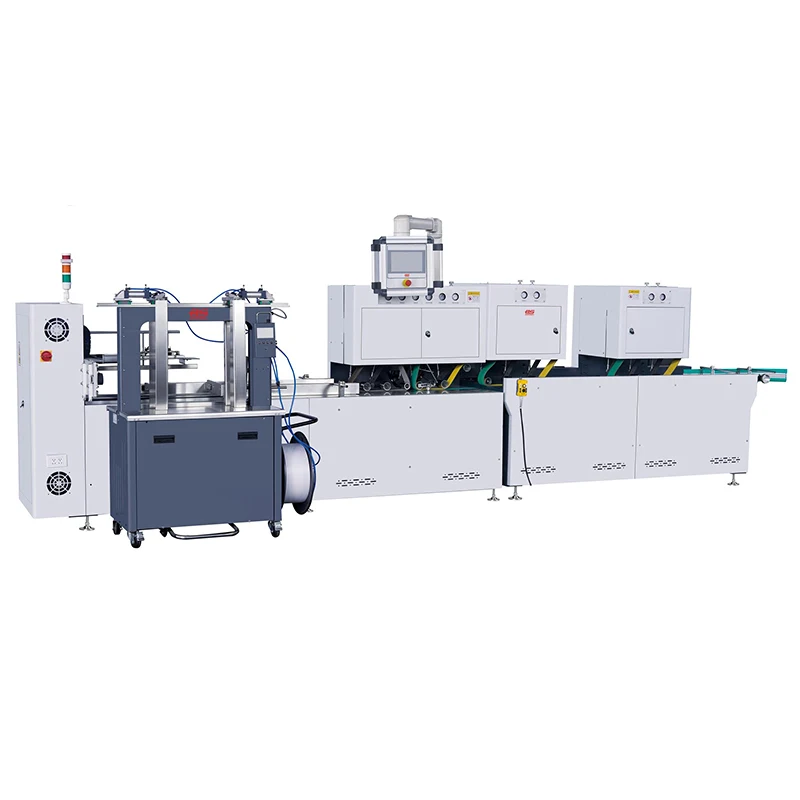
The Realstar automatic folding gluing stacker describes speed-difference separation, laser-type counting and automatic collection. These published features establish a relevant equipment category. They do not establish a universal counting accuracy, automatic reject reconciliation or suitability for every printed finish. Ask for the current quotation and operating description for the exact supplied configuration.
The site’s wording and images can help a buyer identify the assembly to discuss with Realstar. They cannot replace a demonstration with the intended cartons. Request clarification of the detector technology, its safe adjustment procedure, the batch-separation sequence and the meaning of each displayed total. If a proposal includes downstream banding or packing equipment, define whether its count is independent or copied from the upstream system.
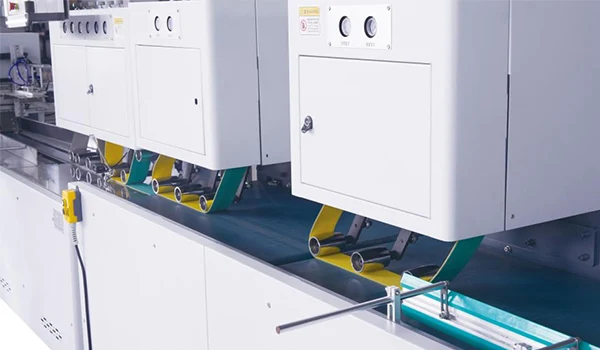
The original product photograph above illustrates separation equipment described on the stacker page. It is useful when discussing the flow of cartons through the delivery. Do not infer a particular sensor location or protective function from the photograph alone; confirm those details against the supplied machine documentation.
Prepare a reference quantity that can be traced
Choose a known group of cartons and independently establish its physical quantity away from moving machinery. Record the carton code, material, folded geometry, print finish and the person completing the check. Keep trial groups identified until the results have been reconciled. Mixing them immediately into production removes the evidence needed to explain a discrepancy.
For a practical verification, use separate observations of the physical group and the displayed total. A second checker should not simply copy the machine number into a form. Agree how a disagreement between manual counts is resolved, such as a fresh recount by another trained person. The reference method should be appropriate to the risk and the size of the group.
Do not use bundle height as the sole reference quantity. Folded thickness, compression and air between pieces can change stack height without changing count. Weight may be a useful separately validated check for a stable product, but it also responds to board and adhesive variation. It does not automatically identify a missing or extra carton.
Test normal production and the transitions
A continuous run is only one operating condition. Include the authorised start-up, planned stop, restart and end-of-order sequence in the demonstration. Observe what happens to an incomplete batch. Ask whether it is retained, completed, discharged separately or cleared by an operator. Each outcome needs an explicit identification and packing rule.
Use representative products that challenge the intended range: short and long folded cartons, relevant surface finishes, and the actual delivery overlap arrangements. Select these from the purchase specification rather than deliberately introducing unsafe feeds. Any evaluation of a detection or rejection response must be planned and supervised under the manufacturer’s safe test procedure.
If a complaint occurs only after a short stop, preserve the bundles immediately around that transition. Comparing them with stable-running bundles is more useful than averaging the whole shift. A total that happens to reconcile at order end can hide an overfilled bundle followed by an underfilled one.
| Trial condition | Physical evidence to retain | Question the check answers |
|---|---|---|
| Steady delivery | Identified complete bundles and independent recounts | Does the indicated batch match the packed quantity under stable conditions? |
| Planned stop and restart | Last complete and incomplete batches around the stop | Are partial batches handled without silent merging or loss? |
| Reject removal after detection | Recorded removed pieces and the affected bundle | Is the correction visible and reconciled? |
| Recipe recall | Carton identity, recalled settings and first approved bundles | Does the saved setup still suit this product? |
| End of order | Remainder pieces, final display and shipping record | Can the last partial quantity be explained? |
This is a proposed trial structure, not a published acceptance standard. Set the number of checks and acceptance criteria in the purchase or quality agreement. The important point is to preserve a chain from an identified operating condition to a physical bundle and its count.
Separate count accuracy from quality sampling
NIST’s explanation of acceptance sampling describes using information from a sample to decide the disposition of a lot. That is a quality decision with a defined plan. It does not mean that a few correctly counted bundles prove that every bundle in the lot contains the correct quantity.
Keep the count verification record separate from checks for glue bonding, damage, printing and dimensional conformity. A bundle can contain the correct quantity of defective cartons. It can also contain saleable cartons in the wrong quantity. Define which control addresses each risk and who releases the order when an exception appears.
For routine operation, the quality team should establish inspection frequency and escalation rules from the customer requirement, process history and consequence of error. Do not label an arbitrary small trial as an AQL plan. A formal sampling plan needs the appropriate definitions, selection method and decision rules.
Investigate discrepancies without erasing the evidence
When physical and indicated quantities disagree, identify the affected interval before changing settings. Record the last verified bundle, the first failed bundle, any rejected pieces and any manual additions. Hold the potentially affected output according to the site’s quality procedure. Restarting the counter immediately may destroy the clearest link between the symptom and its cause.
Check the process explanation before assigning blame to the detector. Look for double feeds or overlaps visible from a protected observation point, irregular separation, pieces removed after counting and incomplete batches handled inconsistently. Technical inspection of a sensor, belt or wiring belongs to authorised personnel following the machine procedure.
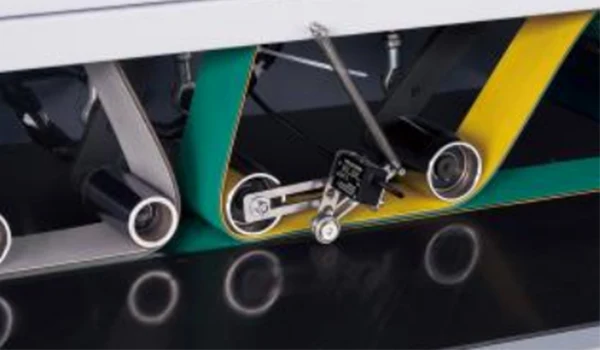
The original Realstar photograph above identifies the counting feature shown on the product page. It supports an equipment discussion rather than proving a particular accuracy claim. If sensor readings need investigation, send the supplier the carton code, display meaning, time sequence and independently checked bundle record.
For a simultaneous surface complaint, use the separate collector scuffing investigation. Increasing contact or compression to stabilise delivery can change surface handling. A count correction should therefore be followed by both quantity and relevant quality checks.
Keep inspection outside the hazard area
Recounts belong at a designated safe inspection position after the bundle has left hazardous moving parts. Never reach into a running delivery to correct an overlap or move a carton past the detector. CCOHS conveyor guidance identifies pinch-point protection and functioning safeguards as essential considerations around conveyors.
For maintenance, adjustments or jam clearing that expose a person to hazardous energy, follow the site’s authorised isolation procedure and the machine instructions. CCOHS lockout guidance explains why a stop command is not equivalent to controlling hazardous energy. The precise isolation points and stored-energy controls are installation-specific.
WorkSafeBC: guards and lockout in manufacturing.
This WorkSafeBC educational video supports the distinction between normal guarded operation and intervention. It is not a carton-counting demonstration or a substitute for the supplied collector’s safety procedure.
Retain a usable acceptance record
A useful record includes the machine identity, carton code, software or recipe identification where available, intended batch quantity and interpretation of the display. Attach the independent counts and explain every removal, addition or partial batch. Include the agreed production conditions and the names of the people witnessing the test.
Specify what happens after a change. Different carton geometry, detector replacement, control updates or a revised delivery layout may require renewed verification. For packing downstream, consider the PE film banding trial guide separately; a secure band does not prove the number of cartons inside it.
FAQ
Can the order total be correct when individual bundles are wrong?
Yes. An extra carton in one bundle and a missing carton in another can cancel in the order total. Verify complete physical bundles as well as reconciling the accumulated order quantity.
Does recalling a saved recipe remove the need for a first-bundle check?
No. Recipe recall restores settings, while material condition, carton geometry or equipment condition may have changed. Check the first accepted bundles under the current job procedure before routine production release.
Should a disputed bundle be opened or estimated from its height?
Use the agreed physical verification method. Where quantity is disputed, a controlled recount provides clearer evidence than height alone. Preserve its identity and record the result before returning any conforming cartons to production.
References
Agree the quantity evidence before acceptance
Bring representative folded cartons and a written count-reconciliation plan to the collector trial. Accept the counting arrangement on traceable physical evidence, including transitions and incomplete batches, and document who controls exceptions before the order reaches packing.