
Board to board pasting delamination should be investigated by identifying which layer separates and under what conditions the failure develops. Record the two substrates, adhesive, application condition and time between pasting and inspection before changing the process. A sheet that looks bonded immediately after the press may behave differently during storage, cutting or folding. This guide sets out a practical investigation for sheet-to-sheet paperboard pasting, including sample identification, controlled comparisons and supplier trial preparation. It does not prescribe universal adhesive settings, and it should not be used as a troubleshooting procedure for thermal film lamination, which involves a different material system.
Define the laminated construction
Describe each sheet by supplier, grade, lot, surface treatment, thickness specification and intended orientation. Identify the faces that will be bonded and whether either face carries printing, varnish or another coating. Record the finished construction and its downstream use. A display board, a book-cover component and a packaging panel may require different flatness, appearance and converting performance even when their incoming sheets look similar.
Keep raw-material samples alongside finished trial sheets. Mark direction and face orientation so that an investigator can relate a separated laminate to its original components. Retain the adhesive product identification, batch, technical data sheet and preparation record. Do not describe every bonding problem as insufficient glue: that assumption can conceal an unsuitable surface, an unapproved adhesive preparation or weak material within the paperboard itself.
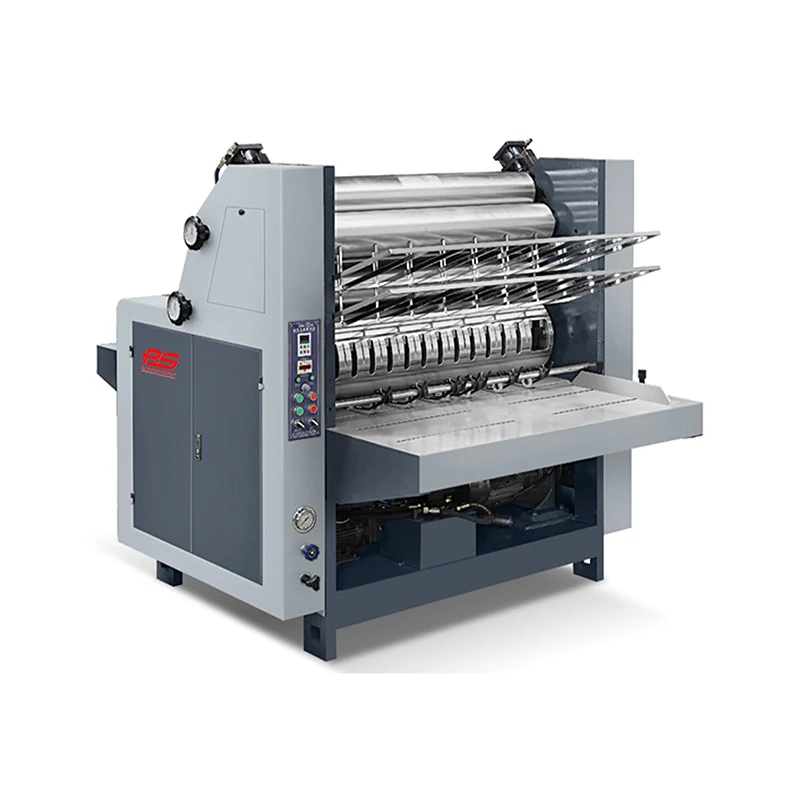
Realstar's KFMJ-1000D board-to-board pasting machine page provides a relevant equipment reference for this process. It describes a sheet-pasting system with registration and pressing components. Ask the supplier to confirm how your construction will be processed on the quoted configuration. Do not transfer settings from a thermal laminator or a corrugator merely because those processes also use the word lamination.
Examine the failure surfaces
When a sample is examined by the approved method, photograph both separated faces and identify their position within the sheet. Look for areas that appear unbonded, a coating that has detached, or paper fibres remaining on the opposite face. Describe what is visible before assigning a cause. If the location is difficult to interpret, ask the material or adhesive specialist to examine retained samples under a suitable test method.
Fibre tear can be useful evidence of where separation occurred, but it is not a universal numerical acceptance rule. Its interpretation depends on the construction and the required material strength. A laminate that separates within a weak board layer may still be unsuitable for its intended use. Avoid applying an arbitrary percentage from an unrelated material test to your sheet construction without an agreed technical basis.
The Tampere University thesis linked here discusses paperboard bonding and failure modes. Use such material guidance to frame questions, not to replace a trial on the actual substrate combination. Where a formal laboratory result is required, agree the method, conditioning, specimen preparation and acceptance criteria with the responsible specialist before commissioning the test.
Map the defect before adjusting the process
Plot the observed separation on a simple sheet outline using the operator side, leading edge and other orientation marks. Keep edge defects separate from central patches and full-sheet failure. Record whether the same location recurs on successive sheets and whether the defect first appears immediately, after storage or during downstream conversion. The pattern helps select the next comparison without pretending that a pattern alone proves the root cause.
| Observed pattern | Evidence to retain | Controlled comparison |
|---|---|---|
| Local unbonded patch | Position, both failure faces and neighbouring bonded area | Compare adhesive transfer and substrate surface at that position |
| Edge separation | Which edge, sheet orientation and time of observation | Compare edge coverage and handling condition |
| Broad separation | Material lots, adhesive preparation and release time | Compare an approved reference construction under the same method |
| Curl with separation | Sheet direction, storage condition and inspection sequence | Compare flatness and bonding after the agreed conditioning period |
| Failure after converting | Cut or fold location and prior bond results | Repeat the actual downstream operation on identified samples |
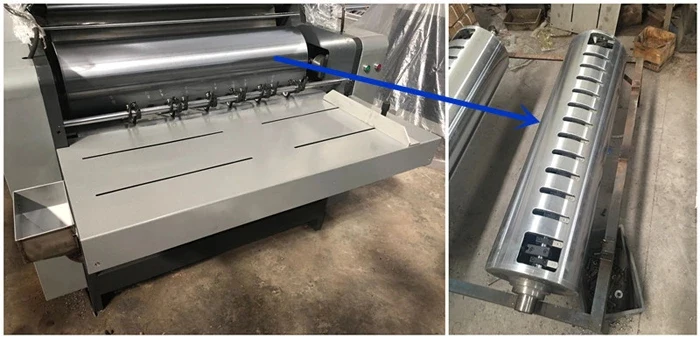
Check substrates before changing adhesive quantity
Inspect incoming sheets for contamination, damage, inconsistent surfaces and distortion. Compare the suspect stock with an accepted reference where one exists. Record storage and handling conditions rather than assuming all pallets arrived in the same state. If a coated face is being bonded, obtain confirmation that the chosen adhesive and preparation are appropriate for that surface.
Check how the two materials respond as a construction, including their orientation and the finished sheet's flatness after the agreed hold period. Do not add water, change a surface treatment or substitute a board grade as an informal experiment without approval. Such changes can affect later performance and may make the resulting samples unsuitable for a direct comparison with the original order.
Verify adhesive identity and application evidence
Confirm that the adhesive in use matches the approved job record. Review preparation, storage, working conditions and permitted adjustments against the adhesive supplier's instructions. When dilution or mixing is allowed, record the actual preparation and measuring method. Avoid copying a viscosity target, mixing ratio or drying interval from an unrelated application, even when the adhesive has a similar general description.
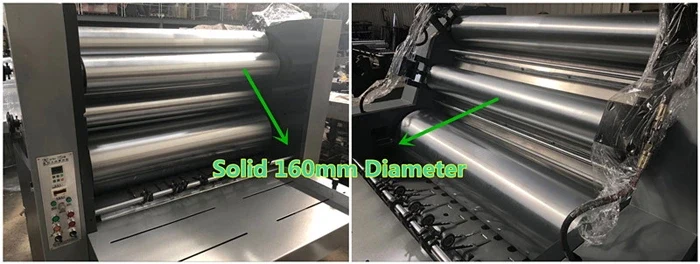
Use the machine supplier's safe procedure to examine whether transfer is even over the required bonding area. Retain evidence of the condition rather than relying only on a verbal description that the roller looked normal. If transfer differs across the sheet, investigate the relevant equipment and material factors with the authorised technician. Increasing application across the entire sheet may not correct a local distribution problem and can introduce other defects.
Review registration, pressing and process timing
Check the approved registration and sheet-handling setup. A sheet that arrives incorrectly may produce an apparent bonding defect at an edge or leave the finished construction unsuitable for downstream work. Record actual observations together with the setup revision. The pictured registration component is an equipment reference, not an instruction to adjust the machine while running.
Review the pressing stage and the time available between adhesive application, assembly and subsequent handling. Ask the equipment and adhesive suppliers to confirm the acceptable operating window for the actual construction. Do not assume that more pressure or a slower line is always beneficial. Use authorised changes and identified samples so the team can distinguish an improvement from normal variation or a different inspection time.
Run controlled trials with comparable inspection times
Prepare a trial sheet that names the hypothesis, the single approved change, the comparison material and the observations required. Keep the construction and inspection method consistent wherever practical. Label every trial group before the sheets leave the machine. If several conditions must change together for a legitimate reason, record them and acknowledge that the trial cannot isolate the contribution of each change.
Inspect samples at the agreed stages, including the period relevant to normal handling and downstream use. Comparing a freshly pasted sample with a reference that has rested much longer can produce a misleading conclusion. Retain enough information to repeat the comparison: material identities, adhesive preparation, machine setup, operating events and observation times. An improved result is most useful when another shift can reproduce it.
If a defect persists, preserve representative failed and accepted samples rather than repeatedly running unrecorded experiments. Give the suppliers a concise evidence package with the sheet map, photographs and process history. This helps distinguish a substrate question from an adhesive application or machine-condition question, and reduces the chance of making several unnecessary changes before the actual cause is established.
Validate downstream performance
Define what the pasted board must do after bonding. The acceptance plan may include cutting, creasing, folding, handling, storage or another application-specific operation. Inspect the actual finished component where practical, not only a flat sheet immediately after pressing. A construction that survives one manual check may still separate at a fold or edge during the customer's process.
Keep different failure types separate in the report. Record bond separation, surface damage, flatness and registration as distinct observations. Passing one characteristic does not excuse a failure in another. The release decision should refer to the agreed finished-product requirements, the recorded inspection method and any unresolved limitation. Do not call a laminate accepted solely because it was possible to produce an attractive demonstration sheet.
Clean and inspect equipment through safe procedures
Pasting equipment includes rollers and other trapping points. Adhesive residue can create pressure to clean quickly, but the cleaning task must follow the assessed safe procedure and the machine instructions. HSE's guidance on safe systems for cleaning printing presses provides relevant machinery-safety context. It does not authorise a particular cleaning method for the machine pictured here.
WorkSafeBC's guarding and lockout training video below is included to support the safety discussion around inspection and cleaning. It is a general manufacturing resource, not a product demonstration. Where the task requires isolation or specialist access, involve the authorised person. Do not reach toward moving rollers or defeat a guard to collect evidence of adhesive transfer.
General manufacturing safety education by WorkSafeBC. Watch the training video on YouTube.
Prepare a practical equipment inquiry
Send the two substrate specifications, finished construction, representative samples and required sheet sizes to the supplier. Add the proposed adhesive information, downstream operations, accepted-output requirement and expected order mix. Ask which configuration and auxiliary arrangements are included, what the trial will measure and how rejected sheets will be counted. Request written clarification of any product-page figure that is essential to the purchase decision.
For the surrounding workflow, the die cutting, stripping and blanking guide helps define the next converting stage. The rigid box wrapping bubbles guide addresses a related but distinct appearance investigation, while the thermal lamination troubleshooting guide concerns film bonding and should be kept separate from board-to-board adhesive pasting. Use those boundaries to keep the inquiry focused on the actual construction rather than combining several different processes under one general lamination label.
Frequently asked questions
Does fibre tear always mean the bond is acceptable?
No. It shows something about the failure location, but acceptance also depends on material strength, construction and intended use. Agree a suitable test and acceptance basis with the responsible specialist.
Should more adhesive be the first correction?
No. Identify the failure pattern, verify material compatibility and examine application evidence first. Make only approved changes and compare samples under consistent conditions.
Can thermal lamination settings be used for board pasting?
No. Thermal film lamination and adhesive board-to-board pasting use different material systems. Obtain instructions for the specific equipment, adhesive and substrate construction being evaluated.
Explore the Realstar packaging and paper converting equipment range to define the surrounding production route.