
A rigid box machine changeover checklist should connect the next order's materials, machine setup and quality approval in one traceable record. Identify the outgoing and incoming formats, prepare the correct components, carry out the authorised setup procedure and inspect the first boxes against a defined reference. Then confirm that acceptable production continues beyond the first sample. For short orders, the useful question is how reliably the team returns to approved output, including adjustment waste and inspection time. This guide focuses on planning and recording a changeover; physical adjustments must follow the specific machine manual and the site's safe working procedures.
Start with a controlled job pack
Bring together the finished-box drawing, construction details, board specification, covering-paper specification and approved appearance sample. Add any customer requirements for lid fit, inserts, decoration and packing. Every document needs an identifiable revision. If the production drawing and the approved sample disagree, resolve the conflict before setting the machine. Otherwise, the setter and inspector may be working toward two different products while both believe their instructions are correct.
Identify the incoming order and outgoing order separately. Record the machine and the relevant tooling or change parts, rather than referring only to a general box family. Note whether the operation includes forming alone or also covers preparation, positioning, wrapping and downstream pressing. The scope determines what the changeover record must include. A standalone forming station and an integrated line should not be compared as though they require identical work.
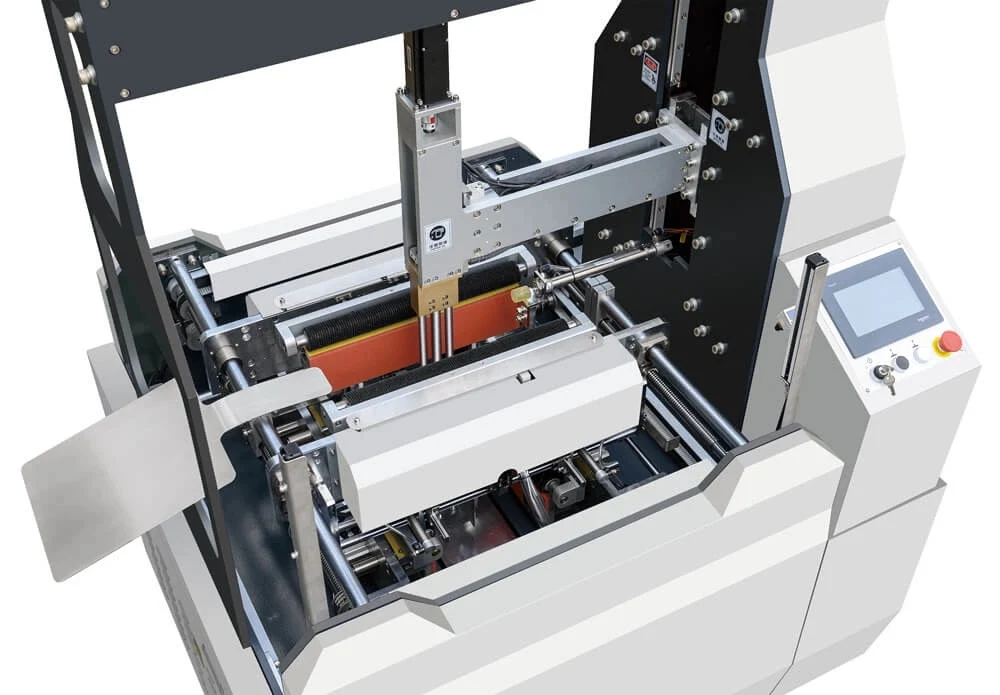
For the semi-automatic route, Realstar's RSK-450ZS product page is a useful starting point for a configuration discussion. Ask the supplier which adjustments and components apply to your actual box construction. Do not infer that a feature described for one model is present on another machine. Where a product page contains overlapping descriptions or different ranges, obtain a single confirmed specification for the quoted configuration before writing the acceptance requirements.
Prepare the next order outside the protected work area
Before the current order finishes, check that the next order's materials are available, identified and in usable condition. Prepare drawings, approved samples, measuring tools and the authorised setup record in a designated location. Keep outgoing materials separate so that the next batch cannot accidentally include an old board size, a different printed wrap or a mismatched lid component. Preparation should reduce confusion as well as reduce waiting time.
Only bring forward tasks that the machine instructions and site procedure allow during normal production. Preparing paperwork is different from adjusting tooling inside a protected area. Assign responsibilities for material delivery, machine setting, inspection and release. If the inspector arrives only after a trial stack has accumulated, waiting for approval can become a substantial part of the changeover even when the physical setup is already complete.
Use a release-oriented checklist
The checklist below is a suggested record structure. It does not replace the machine manufacturer's adjustment sequence or the factory's safety assessment. Add the project-specific inspection requirements, and give each item a clear owner. A tick without an identifiable drawing, sample or recorded observation provides limited evidence when a later shift needs to reproduce the job.
| Stage | Record to retain | Release question |
|---|---|---|
| Job identification | Order, drawing revision and approved sample reference | Do materials and requirements describe the same box? |
| Material preparation | Board and cover-paper codes, lots and quantities | Are the correct components ready and separated? |
| Setup completion | Machine record, tooling identity and authorised setter | Was the documented procedure followed? |
| First-piece inspection | Measurements, appearance results and inspector | Does the sample meet the agreed criteria? |
| Stable production | Observation window, accepted quantity and rejects | Does the approved result continue during operation? |
| Handover | Final settings, deviations and release signature | Can the next shift reproduce the accepted process? |
Separate readiness, setup and approval time
Choose clear milestones for measuring the transition. A practical record can identify the last accepted box of the outgoing order, the completion of the authorised setup, the first accepted incoming box and the point where stable production is confirmed. Keep these milestones distinct. They answer different questions about material readiness, machine work, inspection availability and process stability.
For a simple planning example, suppose the last accepted old-format box leaves at 09:00 and the first approved new-format box leaves at 09:35. The observed transition is 35 minutes. If stable production is confirmed at 09:45, record the additional ten minutes separately. These are illustrative times, not a performance claim for any Realstar machine. The purpose is to make the measurement understandable and repeatable.
Include startup waste in the changeover record. Record how many components entered the trial, how many boxes were accepted and how many were rejected or retained for investigation. A fast transition that consumes expensive printed wraps can be commercially worse than a slightly longer controlled setup. Compare orders with similar construction, materials and crew conditions, and explain differences instead of turning every transition into one unqualified average.
Verify the setup record against the actual materials
A saved setting is useful only when its context is known. Link the record to the drawing revision, board thickness specification, cover material and tooling identity. Before reusing a previous job, check whether any of those inputs changed. A customer may retain the same box name while changing paper finish or internal construction. That change can require renewed validation even when the external dimensions remain familiar.
Record approved deviations where they occur. If the setter changes a permitted parameter during the trial, identify the reason, new value, affected samples and approval. Avoid leaving the production record at an earlier revision while relying on the operator's memory of the final adjustment. Where the machine does not provide electronic recipe storage, a controlled setup sheet can still preserve the relevant information without inventing a capability the equipment does not have.
Inspect the first piece in a consistent order
Begin with identity: correct artwork, box style, material and orientation. Then inspect the specified dimensions and fit. Use the agreed measuring method and suitable tools rather than judging every characteristic from a photograph. Check lid and base together where they form a matched product. Keep the measuring locations clear so that two inspectors do not obtain different results simply because they measured different features.
Review the appearance under consistent viewing conditions. Depending on the job, inspect corners, edge turn-in, surface cleanliness, wrap alignment and visible damage. Use an approved reference for characteristics that cannot be expressed adequately with a dimension. A new appearance limit introduced halfway through the trial should be documented and agreed, rather than applied informally to selected samples after production has already started.
Confirm stability and repeatability
After first-piece approval, observe the process over the agreed production window. Record accepted output, defects, interruptions and interventions. The aim is to establish whether the accepted setup continues to produce the intended result. If the setter must repeatedly correct the same condition, record the interventions even when the final boxes pass. A process dependent on continual specialist attention may need further work before routine handover.
For a purchasing trial, consider an agreed return to a previously tested format. That comparison can show whether the records, parts and operator instructions are sufficient to reproduce the setup. Define the test scope in advance with the supplier. Do not treat one successful return as a guarantee for every material or box style. Retain the actual conditions and any unresolved limitations in the acceptance report.
Keep safe access separate from production pressure
Changeovers can involve access to moving mechanisms, tooling and stored energy. Follow the machine-specific safe stop and isolation procedure whenever the task requires it. HSE's printing machinery guidance emphasises the need for safe systems when cleaning and working around machinery. It provides safety context, while the actual work method must come from the equipment instructions and the site's assessed arrangements.
The WorkSafeBC video below explains guarding and lockout responsibilities in manufacturing. Use it to support a safety discussion before a new setup routine is introduced. It does not demonstrate how to adjust the pictured rigid box machines. Never remove a required protection to shorten a recorded transition, and do not allow a timing target to become permission for an unsafe intervention.
General manufacturing safety education by WorkSafeBC. Watch the training video on YouTube.
Use defects to improve the next changeover
Review the cause of each repeated delay with the people who performed the work. Missing materials, unclear sample standards, unavailable tooling and slow inspection decisions require different remedies. A checklist should make those causes visible. Adding a generic instruction to work faster is unlikely to solve a problem caused by the wrong cover-paper revision arriving at the machine.
Keep one approved final record for the next run. Retain sample photographs, measured results, the relevant settings and any material-specific warning. Make ownership of unresolved actions clear. When a recurring appearance defect is involved, use the rigid box wrapping bubbles guide to structure that separate investigation rather than repeatedly changing the setup without recording evidence. Changeover control and defect diagnosis should support each other without becoming interchangeable tasks.
Prepare a useful supplier trial request
Send the intended order mix, representative box constructions, drawings, materials and the expected frequency of size changes. Describe the operator allocation and the upstream and downstream processes included in your scope. Ask the supplier to identify change parts, setup instructions, training needs and acceptance evidence. Request a demonstration using your representative materials where practical, rather than relying solely on a familiar demonstration box.
For broader production planning, the die cutting, stripping and blanking guide helps define prepared components entering the line. The folder gluer collector capacity guide provides a complementary example of measuring accepted output and handling constraints. Neither reference supplies a rigid-box speed guarantee. Use the combined information to write an inquiry that explains the required result and lets the supplier confirm the proposed configuration against evidence.
Frequently asked questions
Is the first good box the end of the changeover?
It can be one recorded milestone, but stable production should also be checked. Keep the first-piece approval and the later stability observation separate so that repeated adjustments remain visible.
Can a saved setup be reused after changing cover paper?
Only after checking compatibility with the revised material and the approved process. Link the setup record to its actual inputs, and validate changes before releasing the next batch.
Should all rigid box machines have the same checklist?
They can share a record structure, but the physical tasks and safety requirements must match the specific machine, configuration and process scope. Obtain the applicable instructions from the supplier.
Explore the Realstar packaging and paper converting equipment range to define the surrounding production route.
For a broader review of machinery risks during setting and other activities, see HSE printing machinery safety basics. Apply the requirements and procedures relevant to your workplace.