
Die cutting, stripping and blanking describe different jobs in paperboard converting. Die cutting creates the required outline and, where specified, creases; stripping removes unwanted material; blanking separates usable blanks from the remaining sheet structure for subsequent handling. Equipment suppliers may combine these terms, so a buyer should specify the exact input and required output rather than rely on a machine name. This guide explains how to map those operations, prepare representative samples and evaluate a stripping or blanking proposal. It concerns paperboard packaging and related sheet products, not sheet-metal punching, where similar terminology can describe a different process.
Start with the material entering the operation
Place an actual die-cut sheet beside the finished blank and identify everything that must be removed or separated. Mark internal waste, external waste, connecting points and any areas that must remain undamaged. Identify the number of designs and positions on the sheet. A verbal description such as “remove the waste” may mean different things to a die maker, machine supplier and production operator. A marked sheet makes the intended operation much clearer.
Then describe how the material arrives: individual sheets, a counted pile, a particular orientation or a pallet arrangement. State whether it is printed, coated, laminated or embossed. The proposed equipment must be evaluated for that input condition. Do not assume that a machine designed to act on a pile operates in the same way as an inline station handling one sheet at a time. Their setup, material presentation and acceptance evidence may be different.
Distinguish the three operations
Die cutting establishes the shape. Stripping addresses waste removal after the cut. Blanking addresses the separation and delivery of the usable pieces. In practice, a workflow can leave some waste for a later stage or combine separation tasks in one operation. The important purchasing question is which pieces leave the machine, which remain connected and what additional work is needed before the next process can begin.
The Australian training reference Set up and monitor in-line printing operations lists cutting, creasing and die cutting/stripping among possible inline processes. It is useful process context, not a compatibility certificate for a particular machine. Use physical samples and the supplier’s confirmed operating scope to resolve the exact separation task for your production line.
| Operation | Main question it answers | Output to inspect |
|---|---|---|
| Die cutting | Has the sheet been cut and creased to the approved design? | Cut edges, crease locations and sheet integrity |
| Stripping | Has the specified unwanted material been removed? | Internal and external waste areas identified in the brief |
| Blanking | Have usable pieces been separated for downstream handling? | Individual blanks or agreed groups with acceptable edges |
| Collection | Can the separated output be moved to the next process? | Stack order, orientation, count and surface condition |
This is a process-definition table, not a claim that every machine performs all four tasks. Include it in the technical discussion and ask the supplier to mark which tasks are included. Where manual work remains, identify the operation, staffing assumption and inspection requirement. A clear boundary avoids comparing a fully prepared output with an apparently faster result that still needs substantial handling.
Check the incoming cut before changing stripping settings
Inspect representative sheets from the actual upstream cutting operation. Look for variation in cut completion, connection points and pile alignment. Compare sheets from different positions and production intervals. If the input varies, label that variation rather than mixing all samples together. A downstream trial can otherwise produce inconsistent results for reasons that are invisible in the final output.
Retain the approved cutting layout and revision with the trial samples. A small layout change can alter the waste pattern or the way pieces remain connected during transport. Ask the die maker and stripping-machine supplier to review changes that affect the separation task. Avoid treating the stripping operation as a universal correction for incomplete or inconsistent cutting. Establish a controlled upstream input before drawing conclusions about downstream capability.
Understand pile processing and inline processing
An inline station is evaluated as part of the sheet transport sequence of its host machine. A separate pile-processing machine is evaluated with the pile preparation, loading and unloading required around it. These are different production boundaries. When comparing quotations, record whether the reported time includes presenting the material, positioning it, separating it and removing the finished output. A cycle time alone cannot describe the complete batch workflow.
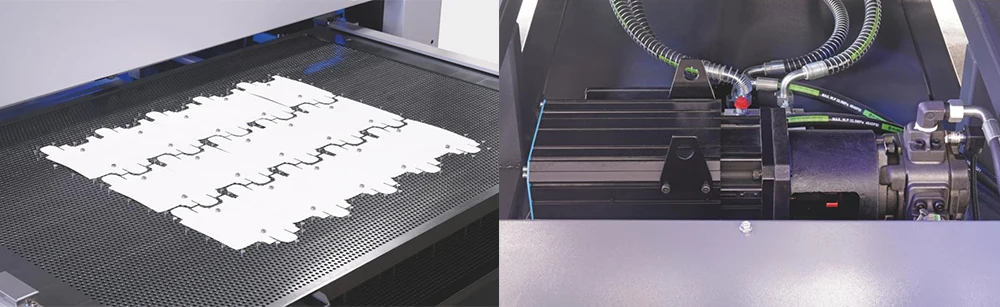
Realstar’s TM-1080AD stripping and blanking machine is presented for post-die-cut processing with a row-stripping function. Confirm the applicable operating mode, sheet arrangement and material range with your own samples. The stripping and blanking equipment range also includes related handling equipment, which may matter when loading and unloading rather than separation itself limits the operation.
Prepare a representative sample set
Choose jobs that cover the intended production mix. Include a normal high-volume layout and a more demanding layout with the features most likely to affect handling. Identify narrow waste areas, small pieces, unusual shapes and sensitive printed surfaces. Do not extrapolate from one simple rectangular blank to every future design. If a machine will be purchased for several distinct product families, state which families must be demonstrated before acceptance.
Provide enough material for setup and an observed production sequence. Record the board grade, thickness, finish, cutting tool revision and source batch. Label the pile orientation. Include the finished-blank drawing and identify the surfaces that will be visible to the customer. Agree whether a sample can be destructively inspected and how rejected pieces will be counted. These details allow a supplier to propose a meaningful trial rather than a short demonstration with ambiguous results.
Define edge quality and surface acceptance
Inspect separated blanks under consistent conditions. Look at the designated waste-removal points, usable edges, corners and printed faces. Record tears, remaining waste, pressure marks or other observed defects without immediately assigning a cause. Compare the defects with the incoming die-cut sheets. If a flaw is already present upstream, note it separately from damage introduced during separation.
Agree acceptable limits with the customer and process owners rather than borrowing tolerances from an unrelated product. A blank intended for a visible cosmetic carton may have different appearance requirements from an internal partition. Functional fit can also matter more than appearance at some locations. Retain labeled accepted and rejected samples so the acceptance decision can be reproduced after installation and by another shift.
Measure the entire batch route
Time the agreed sequence from material ready at the loading point to acceptable output ready for the next operation. Keep machine processing time as a separate figure if useful, but also record preparation, handling and interruptions. Count accepted blanks and rejected blanks using the same unit. If the layout contains several designs, report each design separately where necessary so a shortage in one position is not hidden by the combined total.
For example, a trial producing 3,600 accepted blanks in 45 minutes has an observed accepted-output rate of 4,800 blanks per hour. This is a calculation illustration, not a TM-1080AD performance claim. It assumes the observation boundary includes the stated handling activities. If the trial excludes pile preparation or downstream sorting, add those tasks to production planning explicitly. Avoid multiplying a single best cycle by a full shift without allowing for the actual workflow.
Evaluate changeover and repeatability
Ask the supplier to demonstrate a second layout and then return to the first one where practical. Record the tools, adjustments and verification steps required. A quick initial setup is useful, but the production team also needs to reproduce an accepted result after another job has run. Confirm how job information is stored, how an operator identifies the correct setup and which items still need manual checking.
Separate recipe recall from physical verification. Stored settings do not confirm that the incoming pile, tooling or layout revision is correct. Build a first-piece inspection into the changeover plan. Record who approves it and what happens to material processed before approval. These steps are particularly useful in a plant with many similar jobs, where the wrong artwork or layout may otherwise look plausible at a glance.
Review access, waste removal and servicing
Plan the material and waste routes around the proposed equipment. Decide how scrap is removed without creating obstructions or requiring unsafe access. Review the loading arrangement, available clearance and maintenance access with the supplier and a competent site assessor. Do not infer that an advertised sensor or safety feature makes every possible operating arrangement acceptable. The installed configuration and intended work activities must be assessed together.
The HSE guidance on safeguarding cutting machines distinguishes machine types and their hazards. Apply the guidance relevant to your equipment and jurisdiction. The WorkSafeBC training below provides additional general education on hazardous-energy control when servicing requires access to mechanisms. It is not a substitute for the machine’s isolation instructions or a site-specific procedure.
General manufacturing-safety training by WorkSafeBC. Watch on YouTube.
Build the inquiry around evidence
Send a marked die-cut sheet, finished-blank drawing, material details, photographs of the incoming pile and a description of the required output. State the job mix, batch sizes, accepted-output target and available handling equipment. Ask the supplier to identify exclusions and optional equipment. Where website figures use different modes or units, request a single configuration-specific schedule so the purchase decision is based on a coherent set of conditions.
Keep upstream and downstream quality connected. The food box forming trial guide explains why the next operation needs a controlled blank and material specification. The folder gluer collector capacity guide explains why accepted output at the final handling point matters more than one fast intermediate cycle. Together, these checks help define a production route in which each machine delivers a suitable input to the next stage.
Frequently asked questions
Are stripping and blanking interchangeable terms?
They can be used loosely in product descriptions, but the tasks should be defined separately. Specify the waste to remove, the usable pieces to separate and the required delivery arrangement using actual samples.
Can a stripping machine correct poor die cutting?
Do not assume that it can. Check the incoming cut and its consistency first. Qualify the downstream process using a controlled input and resolve upstream defects with the responsible supplier.
What is the strongest acceptance evidence?
A repeatable run on representative production material, with identified settings, accepted and rejected quantities, edge and surface inspection, handling time and a demonstrated changeover provides a much stronger basis than a short peak-speed video.