
Slitting rewinding telescoping is the sideways displacement of layers in a wound roll, producing an uneven roll face or a cone-like profile. Investigate when the displacement first appears and whether it affects one lane, several lanes or the whole parent roll. Check the incoming roll, web path, cores, guiding and winding conditions before changing tension. There is no universal tension or taper setting that suits every paper, film and laminate. This guide provides a structured trial and acceptance record for narrow-web converting teams, with machine-specific adjustments left to the supplied documentation and qualified service personnel.
Confirm the defect and when it develops
Use a consistent vocabulary when discussing the problem with suppliers. A roll with layers displaced sideways is different from a roll with a damaged core, a wrinkled web or an irregular slit edge. More than one defect can occur together. Photograph both faces and the outer surface while the roll is stationary and safely supported. Record the observed displacement using the agreed inspection method rather than estimating a precise value from an angled image.
Identify the earliest point at which the roll face becomes uneven. It may develop during winding, become visible during unloading, or appear after storage and movement. The sequence matters because an apparently acceptable roll at machine exit has not necessarily passed the handling requirement. Keep records of the winding position, roll orientation and the first inspection time. Trace every sample to its lane and parent-roll identity.
Separate telescoping from consistent web offset. A web that follows the wrong lateral position may build a displaced but relatively even roll. Layers that shift relative to each other can produce a changing face profile. Do not use an edge-guide setting to conceal a core-positioning problem, or treat every lateral movement as evidence that a guide sensor is faulty. Record what the web and roll actually do through the approved observation system.
Inspect the incoming roll and preserve its history
Before blaming the rewinder, check whether the parent roll already has an irregular face, damage, a distorted core or visibly uneven layers. Record the supplier, lot, width, material construction and previous handling. Keep suspect material identified and separate from accepted stock. If a problem follows a particular parent roll through otherwise comparable trials, retain the evidence for the material supplier rather than silently compensating with machine adjustments.
Paper and paper-based laminates can also change with moisture exposure. The Iggesund guidance on paperboard handling discusses how moisture exposure affects paperboard dimensions and flatness. This justifies tracking material conditioning and exposure. It does not prove that moisture caused a particular telescoped film roll or establish a universal storage condition for coated products.
Check the material identification against the approved job sheet. Include thickness or grammage where specified, surface construction, coating side and any relevant handling instructions. Two rolls bearing the same broad product name may differ in properties that matter during winding. Ask the material supplier which acceptance data are available and which changes require a new trial. Do not transfer a tension recipe from a different substrate solely because the widths match.
Verify cores, mounting and the web path
Inspect cores using the specified acceptance method before mounting. Look for damage, contamination and dimensional irregularity that could interfere with secure support. Confirm that the approved core type is fitted and that the mounting arrangement matches the machine instructions. A core supplied for one winding arrangement is not automatically suitable for another. Record core identification and the observed condition alongside the finished-roll result.
Verify core location, shaft or chuck engagement and the authorized setup reference. These are machine-specific checks requiring appropriate training and isolation where applicable. Do not improvise packing, wedges or adapters to make a questionable core fit. If repeated failures occur at one lane or winding position, compare that position with the accepted setup and refer mechanical checks to qualified personnel before concluding that the entire tension recipe is wrong.
Review the intended web route against the supplied threading diagram. Confirm the correct side and sequence around guide and process rolls without reaching into a moving web. A changeover can introduce a routing difference that looks like a material problem. Record the route revision or a safe stationary setup photograph. Where a guide is fitted, confirm the correct reference edge and operating mode with the manufacturer; do not assume its adjustment can correct every upstream or downstream alignment issue.
Separate guiding from winding control
Guiding concerns the lateral position of the travelling web. Winding control concerns how the material is built onto the core, which can involve tension and other machine-specific variables. Their effects may interact, but they should be investigated separately. Record guide behavior, roll-face behavior and the winding stage at which the defect begins. A single complaint such as “the roll walks” is too vague to choose a responsible subsystem.
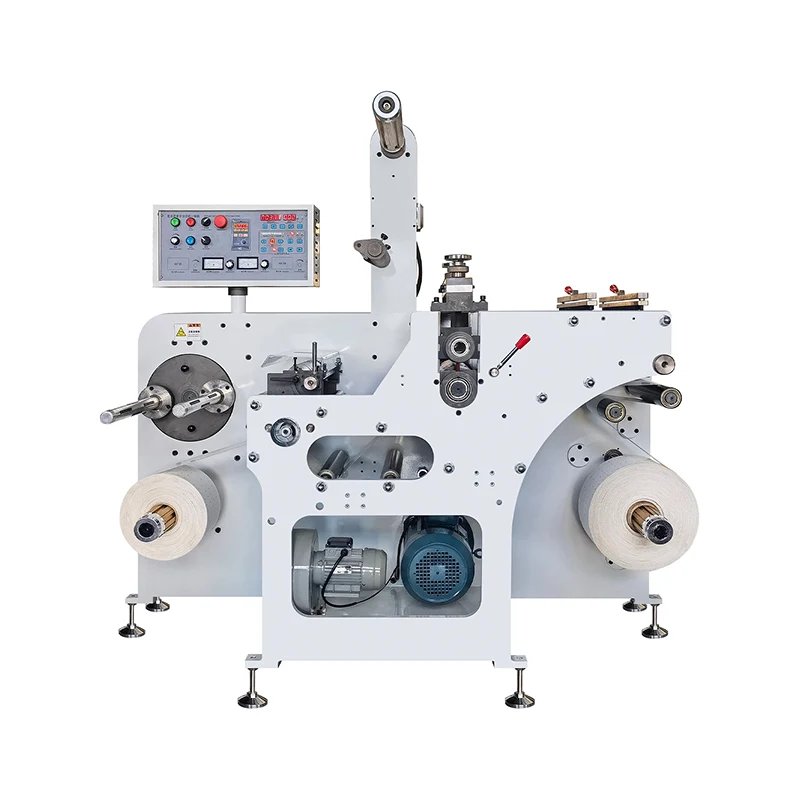
The Realstar RS-350FG slitting and rewinding machine page describes a narrow-web equipment configuration with web guiding and turret rewinding. Confirm the exact delivered version, options and control functions before drawing up a test. The page provides product context; it does not supply a universal setup for every substrate or establish the performance of a particular customer installation.
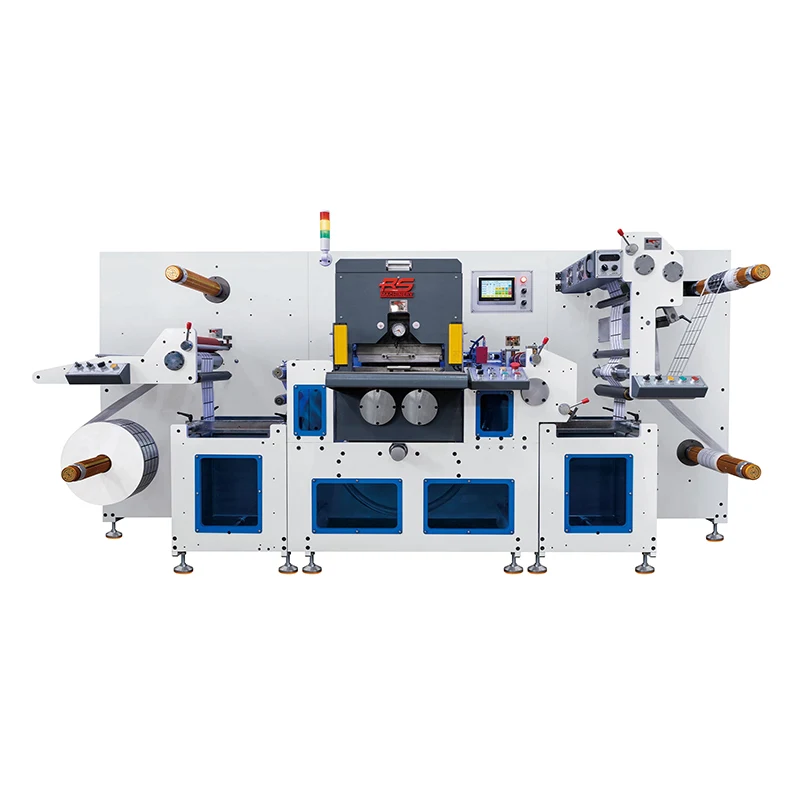
A combined converting line has additional process stages to consider. The Realstar rotary die-cutting and slitting machine is shown here as a different equipment arrangement, not as a component of the RS-350FG. A job transferred between separate slitting and combined converting routes requires its own setup review. Compare what enters each winding stage rather than copying a recipe across unlike machines.
Use the defect pattern to choose a controlled check
The following table is a qualitative investigation aid, not a list of proven causes. Each comparison must stay within the manufacturer’s authorized operating conditions. Do not change tension, guide response and core setup together simply to obtain one acceptable-looking roll.
| Observed pattern | Evidence to retain | Comparison to investigate | Avoid this shortcut |
|---|---|---|---|
| One lane repeatedly differs | Lane number, core and winding-position record | Lane-specific mounting, material profile and setup | Changing the whole machine recipe first |
| Several lanes shift together | Parent-roll identity and web-position observations | Common web route, guiding and incoming-roll condition | Assuming every core is defective |
| Defect grows with roll build | Checkpoint images and diameter-stage record | Approved winding-control behavior across the build | Judging only the first small roll |
| Roll changes after unloading | Machine-exit and post-handling inspection | Support, handling sequence and winding acceptance | Declaring success at machine exit only |
| Irregular face accompanies wrinkles | Separate defect counts and retained samples | Web condition before winding and process route | Treating two defects as one measurement |
Change winding conditions only through an agreed trial
Start from a documented approved setup if one exists. If no approved setup is available, work with the machine and material suppliers to establish safe initial conditions. Record settings with their names and units. A percentage displayed on one controller may represent something different on another machine, so “use the same percentage” is not a valid cross-machine instruction. Never infer a force or stress from an unidentified control display.
Choose a single authorized variable for the next comparison and state why it is being tested. Keep material, core, width and other relevant conditions consistent. Include observations across the agreed roll build rather than stopping as soon as the first outer layers look acceptable. Where the machine uses a programmed winding profile, record the actual profile and the relevant control state so service personnel can reproduce the result.
A successful result must be repeatable through the transitions that matter to the job, including startup, the agreed finished size and unloading. If an adjustment reduces lateral displacement but introduces wrinkles, a damaged core or downstream unwind problems, it has not solved the complete acceptance requirement. Keep each defect category separate. Do not combine unlike problems into one waste number that hides what improved and what became worse.
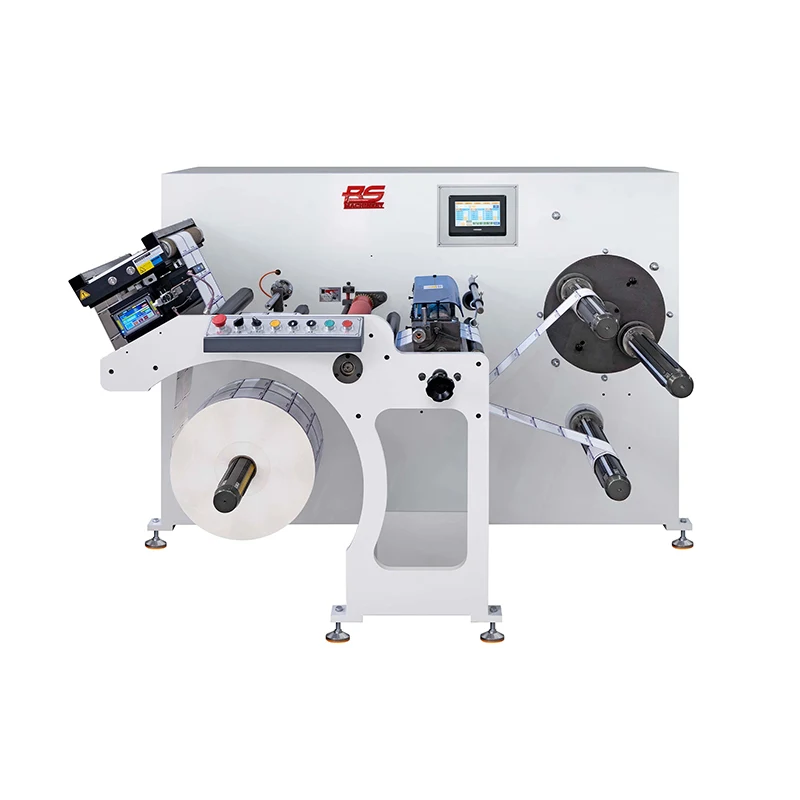
The RS-350G image illustrates another Realstar web-converting configuration to consider when planning the surrounding process. It does not imply that its winding system or settings are identical to the RS-350FG. If the material is die-cut before rewinding, document the resulting web structure and its inspection criteria. The die cutting, stripping and blanking guide helps separate process functions when defining that route.
Include handling and downstream unwinding in acceptance
Agree how finished rolls will be removed, supported, identified and moved. Inspect at machine exit and after the representative handling sequence. Label the inspection times and the method used to assess face displacement. A photograph without the roll identity and checkpoint is difficult to compare with later evidence. Do not deliberately mishandle a suspect roll to test its strength or attempt to push displaced layers back by hand.
Use HSE’s guidance on safe reeling and slitting to inform the workplace risk assessment for roll movement and intervention. Its primary context includes large paper-industry machinery; the actual controls must suit the installed narrow-web machine and task. Keep people clear of uncontrolled roll movement, blades, rotating shafts and in-running nips. Apply the supplied handling and isolation procedures rather than using the article as a substitute for training.
For jobs feeding another machine, define the receiving process’s acceptance criteria. The finished roll should be assessed for the required unwind behavior as well as its appearance. A customer may need stable tracking, a usable core and an undamaged edge, not merely a flat-looking face. If the web is laminated upstream, the thermal lamination troubleshooting guide addresses complementary material defects that should be distinguished from winding displacement.
Build a concise service and purchasing record
Provide the machine identity, supplied configuration, material and core specification, lane layout, finished-roll requirements and a trial log. Include both accepted and rejected samples. Ask which control functions are included in the quoted configuration and how the proposed acceptance trial will demonstrate them on your material. Avoid assuming that a feature name alone establishes a guaranteed result. Discuss the surrounding route through the Realstar equipment range before comparing proposals.
For intervention planning, review the HSE printing machinery safety overview with the site’s responsible personnel. Use the following WorkSafeBC training as general education on guarding and lockout. It is not a slitter threading demonstration, a tension-setting tutorial or an endorsement of any machine. The production investigation should remain within approved observation and service procedures throughout.
Watch WorkSafeBC guards and lockout training on YouTube.
Frequently asked questions
Does telescoping always mean the winding tension is too low?
No. The observed result can involve the incoming roll, material, core support, lateral guiding, winding conditions or handling. Identify when displacement first appears and compare the relevant evidence before changing an authorized setting. There is no universal tension correction for every material and machine.
Can an edge guide guarantee an even finished-roll face?
An edge guide controls a defined aspect of web position within its configured system. It does not independently establish core condition, every part of the web path or finished-roll stability. Confirm the installed function and evaluate the complete winding and handling trial against the agreed acceptance criteria.
When should finished rolls be inspected?
Use agreed checkpoints that include machine exit and the handling or downstream use relevant to the order. Record roll identity, lane, time and inspection method at each point. A roll accepted immediately after winding may still require confirmation after unloading and representative movement.