
Rigid box greyboard warping should be investigated by recording when the panel first loses flatness: before cutting, after gluing, after wrapping, during drying or after storage. Compare the board, wrap and lining as a complete construction rather than assuming that more pressing force will solve the problem. Moisture-related dimensional changes, uneven construction and handling can all be relevant, but the acceptable material and process conditions must come from the suppliers and the approved package design. This guide sets out a practical comparison and acceptance plan without inventing universal board-moisture limits, drying times or machine settings.
Separate panel bow from other box defects
A lid that does not sit correctly can have several different causes. The panel may bow, the assembled corners may be out of square, the wrapped edges may interfere with the base, or the lid and base may have incompatible dimensions. Check these possibilities separately. Record the orientation of the box on a consistent reference surface and describe what changes when the lid is removed or turned. Avoid naming every fit problem “warping.”
Use the approved drawing and inspection method to distinguish a curved panel from an assembly error. Label the long and short directions, outside and inside faces, and the position of the observed lift. Keep a photograph with a scale or other documented reference, but do not calculate an exact bow from a photograph with uncontrolled perspective. A repeatable physical measurement is more useful for comparing trial groups.
Set the acceptance method before testing alternative materials. The customer’s functional requirements may include lid fit, appearance, closure behavior and stability after storage. Those are related but different checks. A panel temporarily flattened by a weight may look acceptable during inspection and recover its bow later. Record when the measurement was taken and what restraint, if any, had been applied beforehand.
Find the first stage at which flatness changes
Retain samples at defined stages: incoming board, cut panel, prepared shell, freshly wrapped box and finished box after the agreed holding period. Use samples with traceable material identities. If the incoming board is already distorted, separate that concern from the behavior introduced by adhesive or wrapping. If the unwrapped shell is flat but the finished lid changes shape, focus the next comparison on the added construction and its processing history.
Compare samples from different positions within a delivery or stack where practical. A top sheet exposed for a long time may not behave like a protected inner sheet. Record opened packaging, movement between rooms and any unusual waiting time. These details can reveal a handling difference without proving that a particular humidity reading caused the defect. Keep the material supplier involved when deciding which measurements are meaningful for the grade.
The Iggesund paperboard handling guidance explains that moisture-related dimensional changes influence paper and paperboard converting. This is a reason to track material exposure alongside flatness. It is not a specification for rigid-box greyboard and does not mean that every warped lid has the same cause. Use the supplier’s grade-specific information and confirm the response in the actual box construction.
Treat board, wrap and lining as one construction
Record the greyboard identity, nominal thickness, measured thickness where required, cut orientation and supplier’s grain information. Identify the wrap, its coating or lamination, and any inner lining. Keep a physical reference for each approved material. Changing only the board description in a purchase order can conceal simultaneous changes in surface treatment, paper stiffness or lining that influence the finished result.
Board and paper may respond differently along and across their main fibre direction. The Iggesund Graphics Handbook discusses fibre orientation and humidity-related dimensional changes in paperboard. Apply that principle as a reason to identify orientation, not as permission to impose its product guidance on every recycled greyboard. Ask the board and wrap suppliers how grain should be specified for the intended design and verify the combination in a trial.
Avoid changing the orientation of production panels casually to improve cutting yield. If orientation forms part of the approved construction, a new cutting layout is a material change requiring review. Conversely, do not claim that one orientation always prevents warp. Panel size, layered construction, adhesive application and environmental history can modify the result. Keep the drawing and trial record aligned so the successful sample can be manufactured again.
Compare adhesive application without guessing at a recipe
A wet adhesive adds another processing variable to the assembly. Record the product identity, batch, supplier instructions and application method. Use the specified checks for mixing, condition and working life where relevant. Do not dilute an adhesive, change its chemistry or adopt a competitor’s suggested temperature merely because a panel has bowed. Ask the adhesive supplier what measurements distinguish correct application from a suspected process problem.
Check consistency across the width and between samples using the approved method. Include the application and waiting sequence, because two samples can have the same material identities yet pass through different timing and stacking conditions. If adhesive quantity is measured, document the unit and method. A visual description such as “light coating” is difficult to reproduce and should not be presented as a quantified application rate.
For related surface defects, the rigid box wrapping bubbles guide addresses a different observation. A visible bubble and a broadly curved panel require different evidence, even if the same wrapping operation is involved. Keep separate defect counts so a process change that improves one appearance issue does not hide a deterioration in overall flatness or fit.
Use a stage comparison table
This qualitative table provides a trial structure, not numerical acceptance limits. Agree the measurements, material conditions and holding period with the relevant suppliers and customer. The purpose is to isolate where the change appears and make each proposed correction testable.
| Stage or observation | Evidence to collect | Comparison worth making | Decision boundary |
|---|---|---|---|
| Incoming board already bowed | Lot, stack position, packaging and orientation | Approved retained board versus suspect delivery | Resolve material acceptance before machine adjustment |
| Flat shell changes after wrapping | Wrap, lining, adhesive and sequence | One authorized construction variable at a time | Do not attribute the result to board alone |
| Only some panel orientations change | Cutting layout and grain identification | Matched samples with documented orientation | Confirm design and supplier guidance |
| Flat immediately, bowed after holding | Time, storage conditions and restraint history | Unrestrained samples at agreed checkpoints | Do not approve only at machine exit |
| Box fits poorly without panel bow | Dimensions, squareness and wrapped edges | Drawing and tooling versus assembled output | Investigate fit as a separate defect |
Relate the trial to the actual machine and workflow
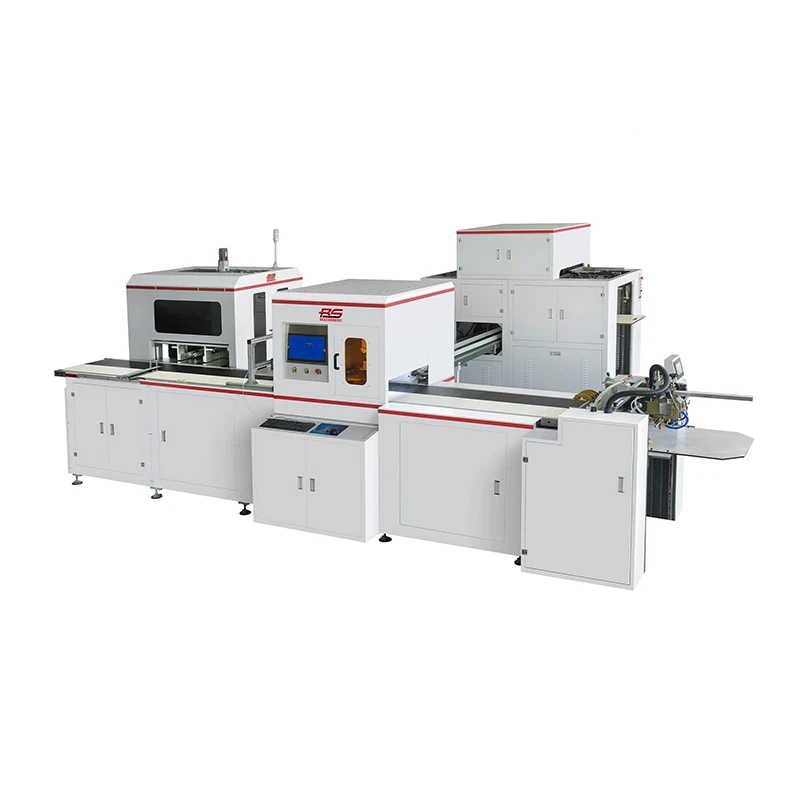
The Realstar RSK-450X rigid box machine page provides the product context for positioning, wrapping and pressing discussions. Confirm the configuration of the delivered equipment and use its operating documentation. The existence of a pressing operation does not establish that it can correct an unsuitable layered construction or guarantee the flatness of every incoming board grade.
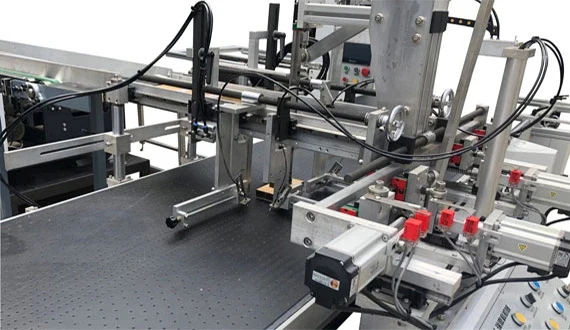
Keep positioning and dimensional setup consistent while comparing material behavior. A change in tooling location can introduce a separate fit issue and confuse the interpretation of a warp trial. Use a signed first-piece reference, confirm the intended orientation and retain the setup revision. The rigid box machine changeover checklist complements this material investigation by recording the production setup rather than diagnosing the board itself.
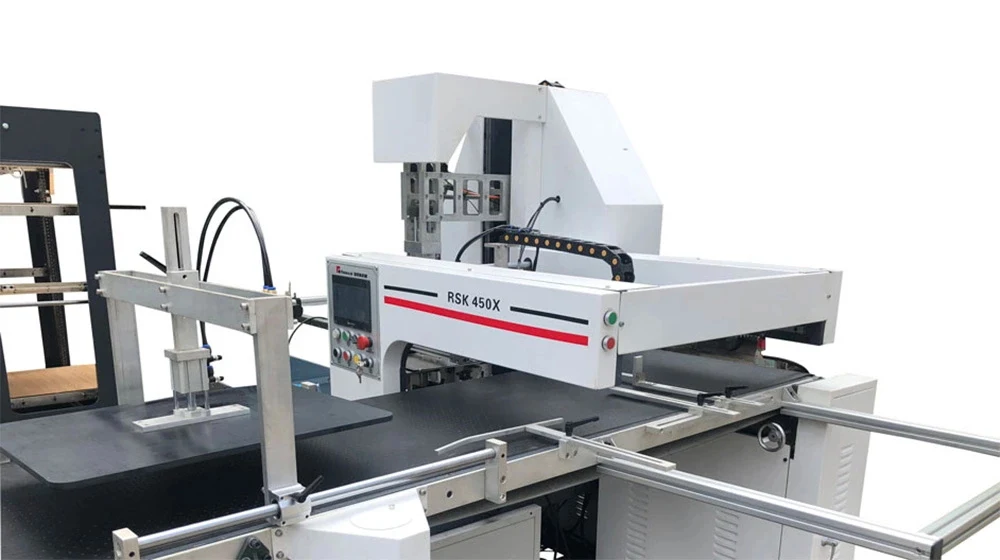
Pressing may influence the condition seen at discharge, but inspection should include the agreed later checkpoint. Do not increase force or alter holding arrangements beyond the machine and material suppliers’ instructions. Excessive or inappropriate intervention can create other defects. Record the actual authorized settings and the sample condition, then judge the construction against the complete acceptance plan instead of treating a single flat sample as conclusive evidence.
Plan the holding and acceptance comparison
Define the intended storage and transport conditions with the customer before selecting a test. The trial should reflect the relevant use case rather than borrow a severe climate cycle with no connection to the shipment. Where controlled environmental testing is required, agree the method with a qualified laboratory or material specialist. Do not invent a laboratory result or promise that a short factory holding period proves stability in every destination.
Keep matched groups and a clearly identified reference construction. Record the date, time and sample orientation at each inspection. If the purpose is to learn whether the panel remains flat without external restraint, make that condition explicit. If the packaging design intentionally constrains the product during distribution, evaluate both the agreed packaging condition and the customer’s functional requirement after opening. These answer different questions and should have separate records.
Close the trial only when the accepted material specification, process record and inspection outcome agree. Include samples that failed and explain why they were excluded. A record consisting only of the best finished box is weak evidence for repeatability. When the concern also involves bonding between board layers, refer to the board-to-board pasting delamination guide; separation of layers is a distinct acceptance issue.
Protect people while investigating the process
Use the supplied procedures for observation, setting and clearing the machine. The HSE printing machinery safety guidance identifies setting and blockage removal as activities requiring attention. Do not hold a panel in a moving mechanism, defeat a guard or reach into a pressing area to test whether more restraint would help. Include material sampling and cleaning in the workplace task assessment.
Watch WorkSafeBC guards and lockout training on YouTube.
WorkSafeBC’s manufacturing training on guards and lockout supports the safety planning in this section. It does not demonstrate the RSK-450X or provide an approved pressing recipe. Use it as general education alongside machine-specific training and the applicable workplace procedures. Explore the Realstar equipment range when defining the upstream cutting and downstream assembly stages to include in the investigation.
Frequently asked questions
Will thicker greyboard automatically stop a rigid box lid from warping?
No. Thickness is only one part of the construction. Identify when the bow develops and compare board, wrap, lining, adhesive application and exposure history. A different board grade should be approved through the actual construction and acceptance trial rather than selected on thickness alone.
Should panels be inspected only when they leave the wrapping machine?
No. Immediate inspection shows the condition at discharge. It does not establish the later condition after holding or distribution. Agree relevant inspection checkpoints and record whether the panel was restrained before measurement so the results can be compared fairly.
Can a moisture meter reading identify the cause by itself?
A reading can contribute evidence when the instrument and method are suitable for the material. It does not by itself prove why a layered box has warped. Interpret measurements with the material supplier, identify the grade and compare them with stage samples and the process record.