
Slitter rewinder edge trim removal should be specified as a complete waste-handling task: separate the waste strip from saleable material, guide it into the intended collection system and keep it controlled throughout the production cycle. When trim breaks or enters a finished roll, identify where control is first lost before changing the whole line. Record the material, slit layout, collection arrangement and timing of the event. Do not clear moving waste by hand or assume that a machine’s advertised speed proves that a particular trim-removal accessory will handle every material at that speed.
Define the waste stream before discussing equipment
Start with the proposed slit layout. Identify the parent-web width, the saleable lanes and every waste strip that must be removed. Distinguish outer edge trim from internal bleed trim and other waste created by the converting process. A system selected for two outer strips may not be suitable for several separate internal strips. Ask the supplier to evaluate the actual configuration rather than a simplified drawing.
Describe each material as it will reach the slitter, including its coating, adhesive exposure, thickness reference and edge condition. Retain representative rolls or samples for the trial. Paper, film and adhesive-bearing material should not be treated as interchangeable waste. The handling method must be compatible with the strip produced by the actual job, not simply with the parent material’s general name.
Distinguish trim control from finished-roll quality
A finished roll can show a winding defect even when waste is being removed correctly. Conversely, neatly wound saleable lanes do not prove that trim handling is reliable during acceleration, stopping or a roll change. Keep these observations separate. Record when the waste first deviates from its intended route and whether saleable material is affected at the same time.
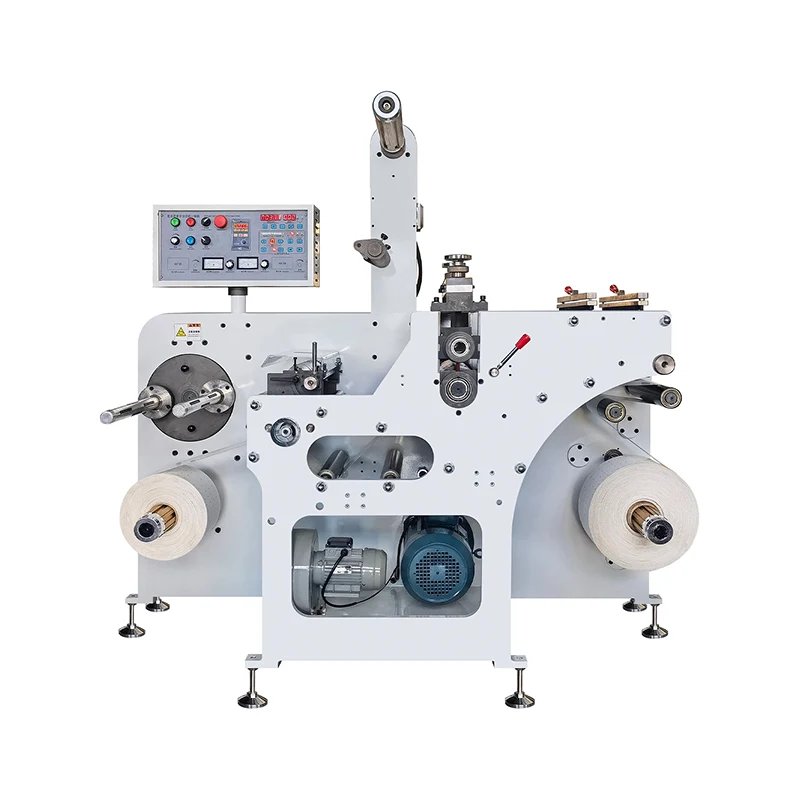
The Realstar RS-350FG slitting and rewinding machine provides a relevant starting point for a narrow-web project. Its public description does not establish which trim-handling arrangement is included in a particular quotation. Request an itemized scope, waste-route drawing and material trial. Do not describe a pneumatic collector, trim winder or specific extraction capacity as supplied unless the configuration is confirmed.
Compare collection methods by the job they must perform
A trim winder collects a continuous waste strip on a separate winding arrangement. A pneumatic system conveys waste along a designed route to collection or another treatment stage. These descriptions identify functions, not interchangeable accessories. Ask how the proposed arrangement handles a broken strip, a nearly full collector and the transition between production conditions. Confirm what the operator is expected to do and from where.
For an application requiring several waste streams, ask whether they can be combined without fouling, crossing or creating an access problem. If cutting or size reduction is proposed, request details of its guarding, maintenance access and compatibility with the material. Do not add an improvised fan or nozzle and assume that the result is equivalent to a designed waste system. The complete route needs supplier review.
Use safe observations to locate the first loss of control
Record whether the trim breaks near the cut, deviates before the collector or accumulates after entering the waste route. Identify whether the event occurs at startup, during steady running, when the collector fills or at another repeatable transition. Use the normal observation position and retain alarm logs where available. A safely obtained photograph after the machine has been made safe may be more useful than an unlabelled video of the whole line.
Do not pull trim out of a running machine, open a duct to investigate moving material or use a hand-held tool near rotating parts. Stop according to the approved procedure when waste becomes uncontrolled. Have the authorized person inspect the relevant area using the machine-specific safe system of work. The observation record should help that person choose an inspection, not encourage production staff to enter the hazard area.
| Observed event | Evidence to collect safely | Supplier question |
|---|---|---|
| Trim breaks near the slit | Slit layout, material batch and labelled edge sample | Which cutting and strip-condition checks are appropriate? |
| Trim reaches a saleable lane | Position map and timing of the first event | Where should separation and capture be verified? |
| Waste builds up after collection begins | Collection state and run duration | Is the route or collection stage suitable for this waste? |
| Problem appears during a transition | Sequence log and operating condition | How is trim control maintained during that transition? |
| Several strips interfere with one another | Actual waste-stream drawing | Should routes or collection stages be separated? |
| Operator access is repeatedly needed | Intervention record and task description | Can the design reduce the need for manual intervention? |
The table structures the investigation; it does not establish a root cause. The HSE publication Rewinding paper safely discusses reeling and slitting hazards and tasks such as clearing breaks. Its main context is paper and board production, so equipment-specific procedures are still required for a narrow-web converting installation.
Protect the strip without inventing a universal tension
Ask the supplier how the proposed trim arrangement controls the strip for the material and slit layout being tested. A narrow or fragile strip may need a different handling assessment from a robust waste band, but this guide supplies no universal tension, nozzle setting or minimum trim width. Those values depend on the actual equipment and material and should come from an approved trial.
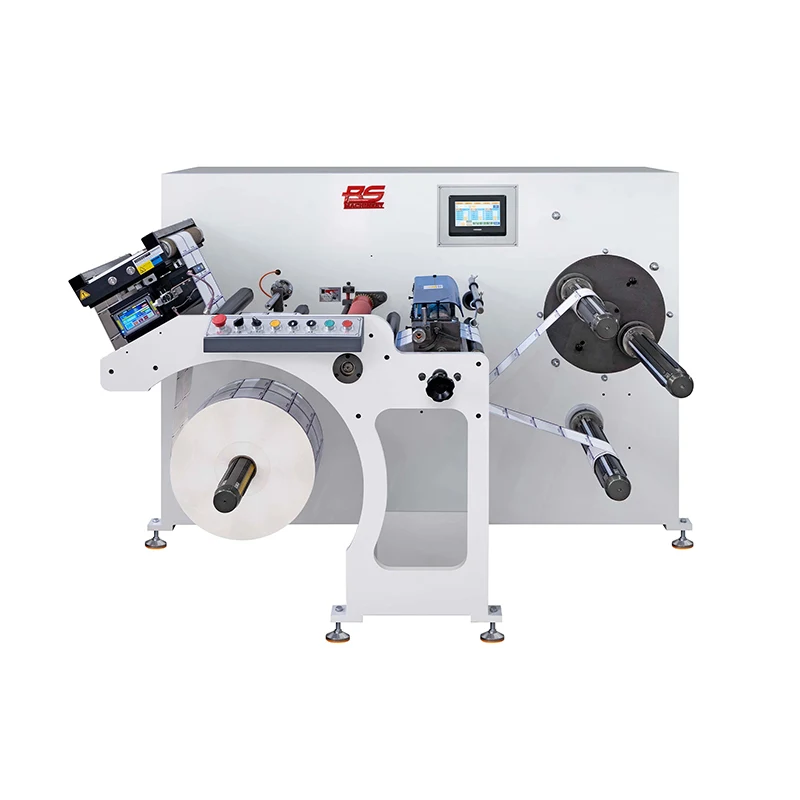
This photograph shows a separate Realstar rotary die-cutting and slitting machine. It illustrates another converting configuration that may generate waste; it is not a photograph of the RS-350FG’s trim collector. When comparing machines, ask each supplier to identify the actual waste source and handling route. A similar finished roll does not mean the equipment creates or removes waste in the same way.
Assess collection access before production begins
Locate the collection point on the proposed installation drawing. Confirm how it will be inspected, emptied and returned to service, and what happens while it is unavailable. Record access routes, responsibility and the method for keeping collected material from interfering with normal movement around the line. Do not wait until a collector is full to decide whether production can safely continue.
If the arrangement includes ducts, fans or other powered equipment, ask for the applicable maintenance and isolation instructions. The NIOSH hazardous energy control overview explains why clearing and servicing tasks require planned control of hazardous energy. Apply the site’s machine-specific procedure through authorized people rather than treating a normal stop button as sufficient for every intervention.
WorkSafeBC: guards and lockout in manufacturing.
Test steady running and transitions separately
An acceptance trial should reproduce the relevant material and slit layout, but it should also include the operating transitions that matter to the order. Agree which startup, stopping, collection and changeover conditions will be assessed within the supplier’s safe method. Record the actual condition used instead of relying on a general statement that the line “ran well.” Retain both accepted output and any affected samples.
Define what counts as a failed trial before testing begins. Examples might include waste entering a saleable roll, an unplanned stop caused by trim or a required intervention outside the agreed procedure. Set the actual commercial acceptance criteria with the customer and supplier. Do not manufacture a universal pass rate or run duration. A short demonstration can support a limited conclusion, but its scope should remain explicit.
Keep matrix stripping and edge-trim removal distinct
Label converting may create a matrix as well as narrow waste strips. The geometry and handling requirements are different, so avoid using a successful edge-trim trial as proof of acceptable matrix stripping. The label matrix stripping guide addresses that separate investigation. Identify which waste system is responsible for each stream and where one process hands material to the next.
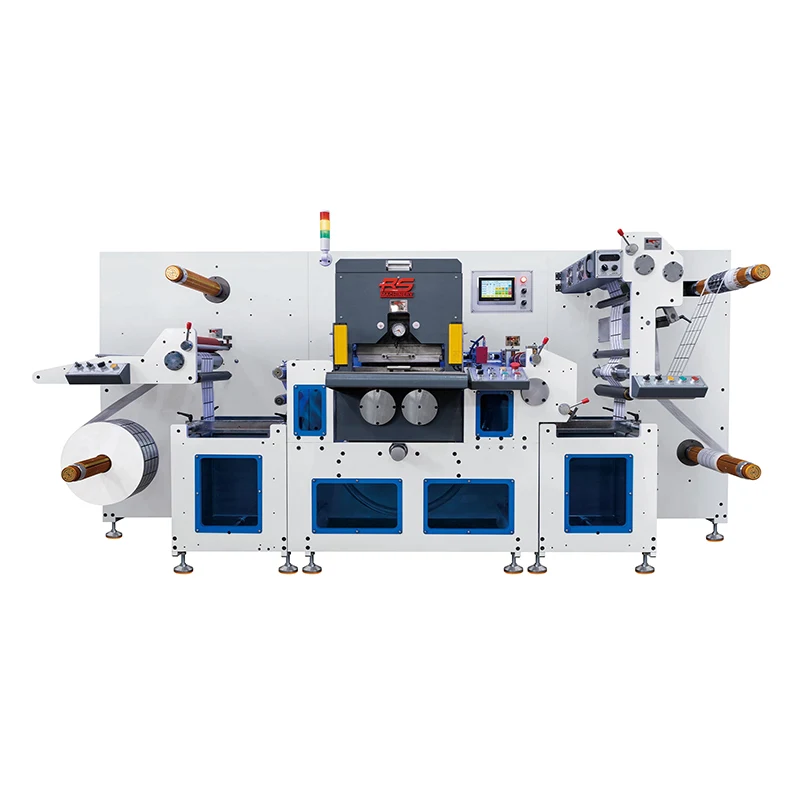
The photograph shows another Realstar converting machine rather than the inside of a pneumatic waste route. Use such equipment comparisons to clarify project boundaries, not to imply that one machine’s accessory is included with another. Ask for a complete configuration list showing standard equipment, optional equipment and customer-supplied services. This helps purchasing compare quotations that otherwise use the same broad phrase, “waste removal.”
Check saleable rolls after a waste event
Quarantine affected output according to the site’s procedure and identify the production interval associated with the event. Do not assume that removing a visible loose strip proves the rest of the roll is clean. Agree the appropriate inspection and disposition with the responsible quality person. Preserve enough traceability to connect a rejected roll with the original parent roll, lane and operating record.
For a separate winding complaint, consult the slitting rewinding telescoping investigation. The die cutting, stripping and blanking overview also helps distinguish converting operations when discussing a combined line. Keep the trim-removal record focused on the waste stream and avoid attributing every downstream defect to the collector without evidence.
Make the purchase specification reviewable
Provide the supplier with representative material, proposed layouts, identified waste streams and the planned operating sequence. Ask for the collection method, routing, access requirements, supplied services and procedures for dealing with breaks. Include training, replacement components and responsibility for integration. Request a trial report that records the actual equipment configuration rather than a generic demonstration of another installation.
After acceptance, retain the approved configuration and state which changes require review. A different adhesive, additional waste lane or revised collection route can introduce a new handling condition. Keep intervention records during production so recurring access problems lead to a design review rather than becoming routine workarounds. The useful outcome is a traceable waste-handling process whose operating limits and responsibilities are understood before the next order arrives.
Frequently asked questions
Is edge-trim removal included with every slitter rewinder?
Do not assume it is. Confirm the exact quotation, configuration and waste-route drawing, including optional equipment and customer-supplied services.
Can I pull a broken trim strip clear while the line runs?
Do not intervene in moving waste. Follow the approved stop and safe intervention procedure, with inspection or clearing performed by authorized people as required.
What should an edge-trim acceptance trial include?
Use the actual material and slit layout, agreed operating transitions, the proposed collection route and defined quality criteria. Record interventions and inspect affected saleable output.