Label liner die strike is damage left in the release liner or its release coating when a label is die cut too deeply for the material construction. Investigate it by retaining labeled samples, inspecting the liner below removed labels and comparing the cut around each lane and repeat. The target is a clean cut through face material and adhesive while preserving the liner’s intended function. Increasing cutting pressure until the waste comes away is not a sufficient acceptance test. A roll can strip successfully on the converting machine yet develop release difficulties or breaks at a customer’s applicator.
Separate liner damage from incomplete cutting
A pressure-sensitive label construction includes face material, adhesive and a release-coated carrier. Each layer has a different function. Cutting must separate the label shape without compromising the carrier needed for later handling. The Avery Dennison converting and printing watchouts distinguish excessive cutting, which can damage the release layer and create dispensing problems, from insufficient cutting, which can leave adhesive connections and pull labels with the matrix.
These two conditions can produce confusingly similar production complaints. A label following the waste may be incompletely cut, but irregular release or damaged liner can also disturb the stripping process. Keep the physical evidence and establish what remains connected. Do not identify die strike only from a matrix break or reject it merely because the liner remains in one piece. The investigation needs both cut-edge inspection and release behavior.
Preserve evidence before adjusting the machine
Record the material product code, roll and batch identifiers, face material, adhesive, liner type and documented liner thickness. Add die identification, job drawing revision, machine, running condition and the first location where the symptom was observed. Keep a piece of unconverted stock when available. This gives the material and tooling suppliers a baseline against which to compare the converted sample.
Mark machine direction, operator side, lane and repeat on retained pieces without contaminating the test area. Preserve good material from before the fault and questionable material from after it. If the customer reports dispensing failure, ask for a finished roll segment with its orientation and application conditions, not only a detached label. A photograph can show location, but the actual liner may reveal damage or surface changes that are invisible in a phone image.
Match the tooling to the liner construction
The Avery Dennison technical overview for Global MDO Next Generation discusses tooling and PET liner evaluation for that particular construction, including contacting a technical representative for test training. Its construction-specific approach is a useful reminder to identify the actual liner and tooling before approving a job. Use that principle when preparing a trial request: a job name such as “paper label” does not describe the entire construction that the die must cut.
A change from one liner construction to another should trigger a tooling review rather than an automatic reuse of the previous setting. Ask the material supplier what liner examination and release checks are suitable, and ask the tooling supplier what adjustments are authorized for the specific die and machine. Do not transfer rotary-tooling clearances or bearer advice to a platen process without confirming applicability. Different machine architectures can require different setup methods.
Relate the investigation to Realstar equipment
The Realstar RS-D automatic label die cutting machine is described as a self-adhesive label machine using a pressure plate structure, controlled feeding and optical tracking. This makes material registration and cut quality relevant purchasing questions. Its product description does not establish an acceptable liner penetration limit for your label construction. That limit and the inspection method must be agreed with the material, tooling and converting parties.
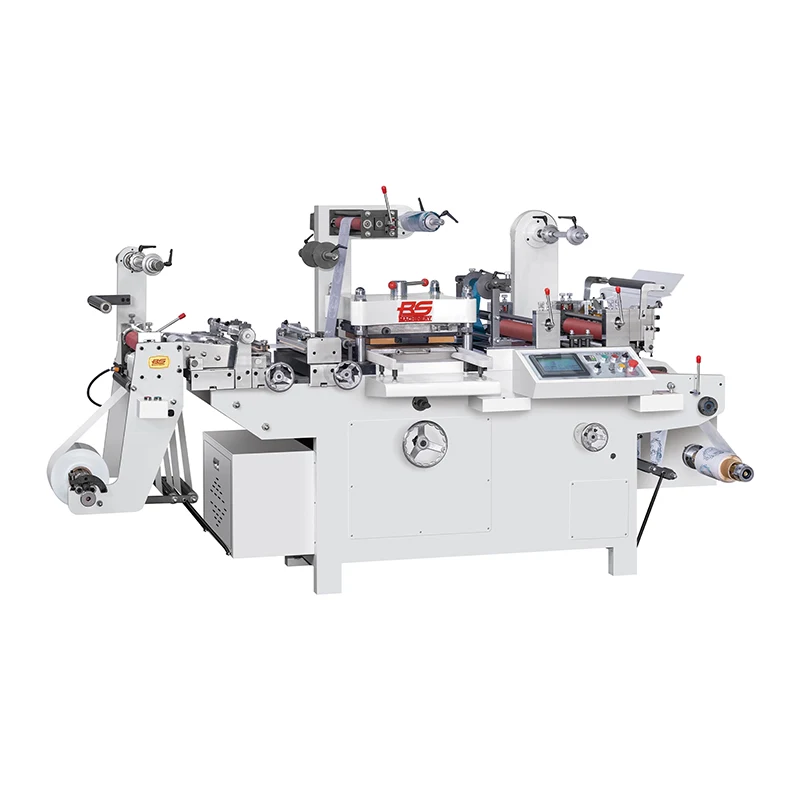
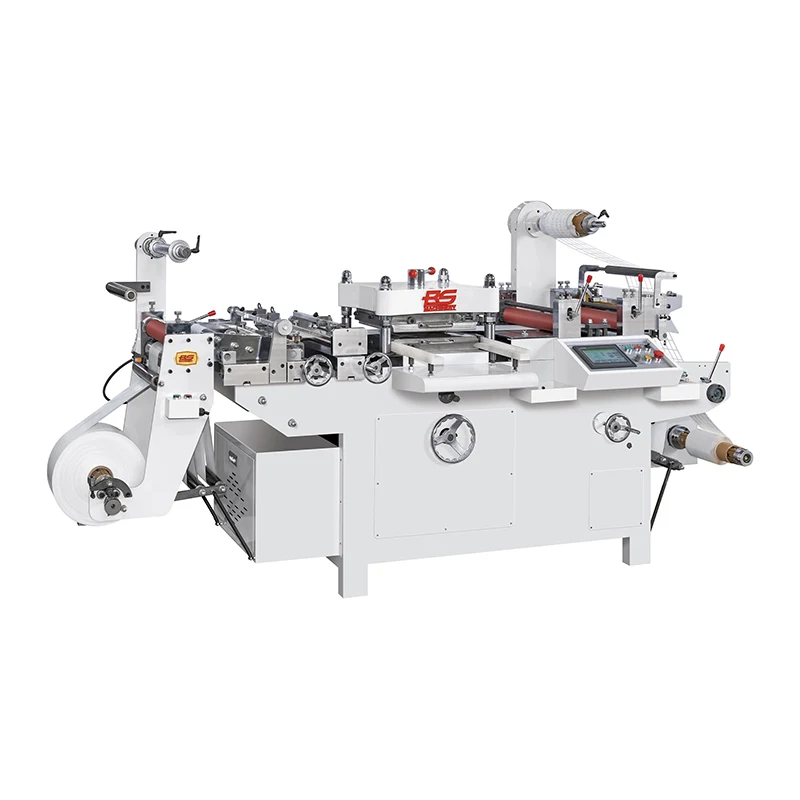
The machine photographs in this guide identify product alternatives, not a guaranteed common tooling system. The RS-Z alternative below combines label die cutting and hot stamping; it should be evaluated on its own documented configuration. A customer needing only label cutting should not assume that an additional finishing function automatically improves liner protection. Request a material trial that isolates cut depth and release performance on the exact proposed route.
Inspect a planned sample set
Take samples using the approved safe procedure after the machine is stopped or from an authorized sample collection point. Remove labels from the retained section and examine the exposed liner under suitable light and magnification. Compare the whole perimeter, including corners and transverse sections. Record whether the mark is only visible, whether fibers or film appear disturbed, whether the liner opens along the outline and whether release is uniform.
Choose the inspection technique with the material supplier. Methods appropriate to a paper liner are not necessarily suitable for a film liner. Avoid publishing a universal “visible mark equals failure” rule without the relevant construction and supplier criterion. Use an agreed reference sample and a documented pass condition. If a dye or marker method is proposed, confirm the procedure and interpretation before using it as a release decision.
Map the fault across lane and repeat
A lane map is often more useful than a single pressure value. Number positions across the web and identify consecutive repeats along it. Place observations on that map so that the suppliers can see whether the fault follows one position, recurs once per tool cycle or changes during the run. Keep the machine’s own setting names in the record and avoid inventing equivalent units between dissimilar machines.
| Pattern observed | Evidence to retain | Question for the trial | Release requirement |
|---|---|---|---|
| One lane shows a deeper outline | Matching liners from every lane | Is the difference repeatable across the sheet or web? | All supplied lanes meet the agreed liner criterion |
| Same corner fails repeatedly | Consecutive repeats with orientation marks | Does the location follow the tool geometry? | Representative corners release without the reported fault |
| Damage appears after material change | Old and new stock identifiers and samples | Does the tool match the new liner construction? | New material is qualified before routine production |
| Roll strips well but dispenses poorly | Converted roll segment and customer conditions | Was release tested after converting and normal handling? | Representative applicator trial is accepted |
| Liner tears across the label row | Broken piece with adjacent intact repeats | Does tearing begin along a cut outline? | Carrier remains functional under agreed downstream conditions |
This is an investigation framework rather than a specification for cut depth, pressure or web tension. Set those values only from the actual equipment, tooling and material documentation. An improvement at one position does not justify releasing the roll until the other lanes and relevant downstream conditions have also been checked.
Change one authorized condition at a time
After the baseline inspection, agree the next adjustment with the responsible operator and supplier. Hold material, tool and sample collection method constant wherever possible. Label the setting change and retain both the before and after samples. If the cut becomes shallower, check that face material and adhesive are still completely separated; solving liner damage by creating an incomplete cut simply moves the defect to another stage.
Do not compensate for a questionable cut by increasing stripping force or altering winding settings until the cut itself has been evaluated. Such changes may hide the symptom at the converting station while leaving the liner unsuitable for later use. When the cause remains uncertain, segregate affected work and send the physical samples for review. A controlled hold is more useful than repeatedly changing several settings without a sample trail.
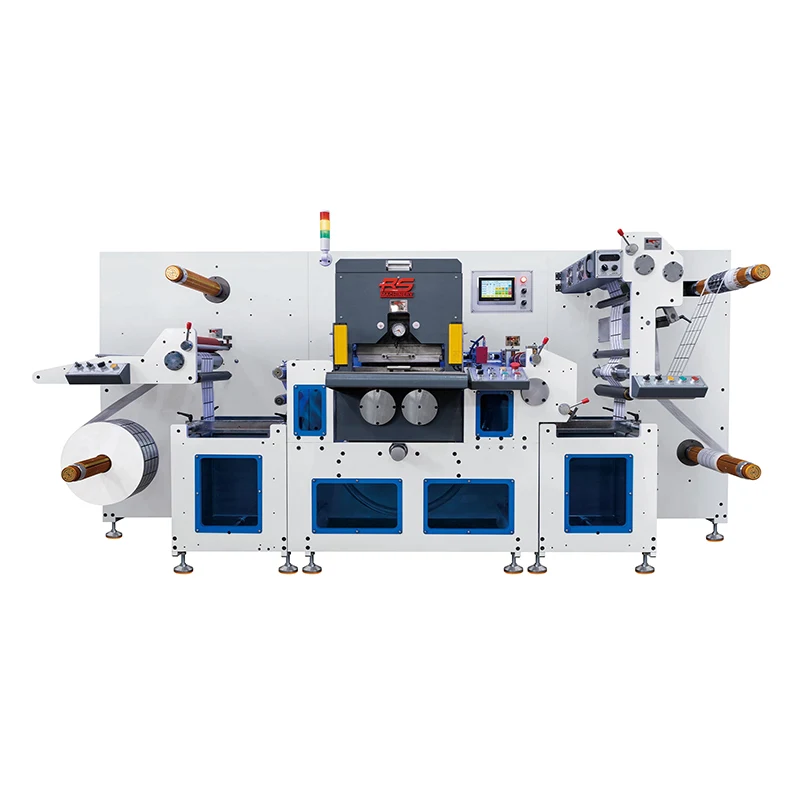
The separate RS-350G machine photograph provides another product comparison point. Ask for the actual supplied configuration and a demonstration on your stock rather than assuming that photographs establish identical control systems. The complementary label matrix stripping guide covers waste behavior. The slitting and rewinding telescoping investigation addresses finished-roll geometry, while the broader die cutting, stripping and blanking guide helps separate these process stages.
Include downstream dispensing in acceptance
Agree the assessment age and storage or handling route before the trial. Inspect converted samples and then test representative finished rolls under the intended dispensing conditions where feasible. Record which roll section was tested, orientation, material identification and the observed failure mode. A hand peel is useful evidence, but it is not automatically equivalent to the customer’s application process or its production requirements.
Define what constitutes an accepted roll and what triggers a hold. Include responsibility for reviewing uncertain liner marks, identifying affected lengths and authorizing restart. If a fault is intermittent, sample early, during stable running and after a planned stop rather than relying on one favorable sample. The frequency should come from the job risk and agreed quality plan, not from an arbitrary interval copied from another label construction.
Keep inspection outside moving equipment
Do not inspect a cut by reaching between a tool and anvil, pulling on a moving web or defeating a guard. Follow the machine’s stopping, isolation and safe sampling procedures. HSE’s machinery maintenance guidance explains the importance of safe maintenance arrangements. The WorkSafeBC video below supplies general guards and lockout context, with machine-specific instructions remaining essential.
WorkSafeBC: guards and lockout in manufacturing.
For an equipment inquiry, submit the full label construction, liner information, drawing, lane layout, required finished format and downstream application needs. Ask Realstar and the tooling supplier to identify the proposed process and trial conditions. Request retained sample rolls and a written liner acceptance method. This gives purchasing a meaningful comparison between machines without treating catalog output figures as proof that a particular liner will survive converting and dispensing.
Frequently asked questions
Does a visible outline always mean the liner is unusable?
No universal visual rule covers every liner construction. Compare the mark with the material supplier’s approved method and reference samples, and check functional release and carrier integrity under the agreed conditions.
Should cutting pressure be reduced whenever the liner breaks?
First preserve and inspect the evidence. A break can have several contributors. Any authorized adjustment must still produce complete separation of face material and adhesive while meeting the agreed liner condition.
Is a successful hand peel enough to release the roll?
It is useful but may not represent automatic dispensing. Include representative downstream testing, defined sampling and documented acceptance for the actual finished roll and application route.