
Hot foil stamping makeready is the preparation that makes the approved die, packing and substrate meet evenly before production is released. Start with a documented material and tooling combination, establish repeatable contact using the machine maker’s procedure, then assess foil coverage, fine detail and registration after the system has stabilized. More pressure is not a reliable substitute for correct preparation. This checklist is for production planning and acceptance discussions; the permitted packing materials, adjustment method and operating limits must come from the specific press manual and trained personnel.
Define the job before preparing the press
A makeready record should identify the artwork revision, die identification, foil grade and batch, board grade, printed surface and any coating or laminate. Keep an approved visual reference nearby. A foil that looks correct on an unprinted trial sheet may behave differently on the actual finished surface, so a visually similar substitute is insufficient for final approval. Ask whether the proof represents the production coating and drying condition.
Separate the acceptance criteria. Coverage describes whether the intended image has transferred. Detail concerns open counters, thin strokes and clean boundaries. Registration describes the image position relative to the sheet or print. Impression depth and reverse-side marking need their own limits. A sample can pass one criterion and fail another. Recording these independently helps avoid adjusting contact pressure to solve a feeding problem.
Confirm which machine and tooling are actually supplied
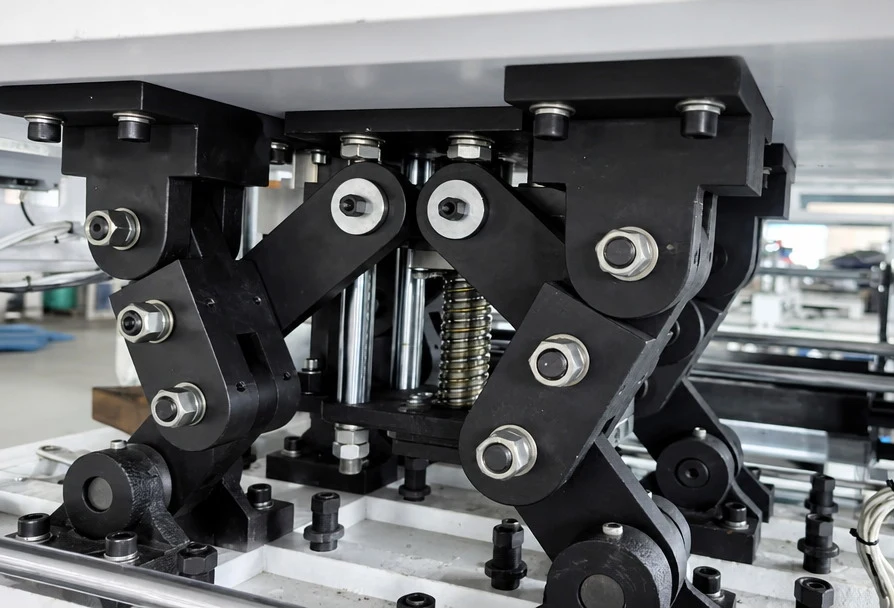
The Realstar automatic high-precision hot stamp machine is a relevant product reference for this workflow. Its page illustrates the machine and component arrangements. Confirm the exact model, installed heating controls, tooling mount and supplied documentation in the quotation. The photographs do not establish a universal die thickness, pressure setting or safe adjustment procedure.
Several specifications on a sales page may require clarification before a purchase, especially when table rows appear inconsistent. Request a signed configuration sheet and a trial with your material rather than transferring a setting from another model. A servo-driven pressing arrangement still requires verified tooling, preparation and operator training. Automation does not make unsuitable packing or damaged dies acceptable.
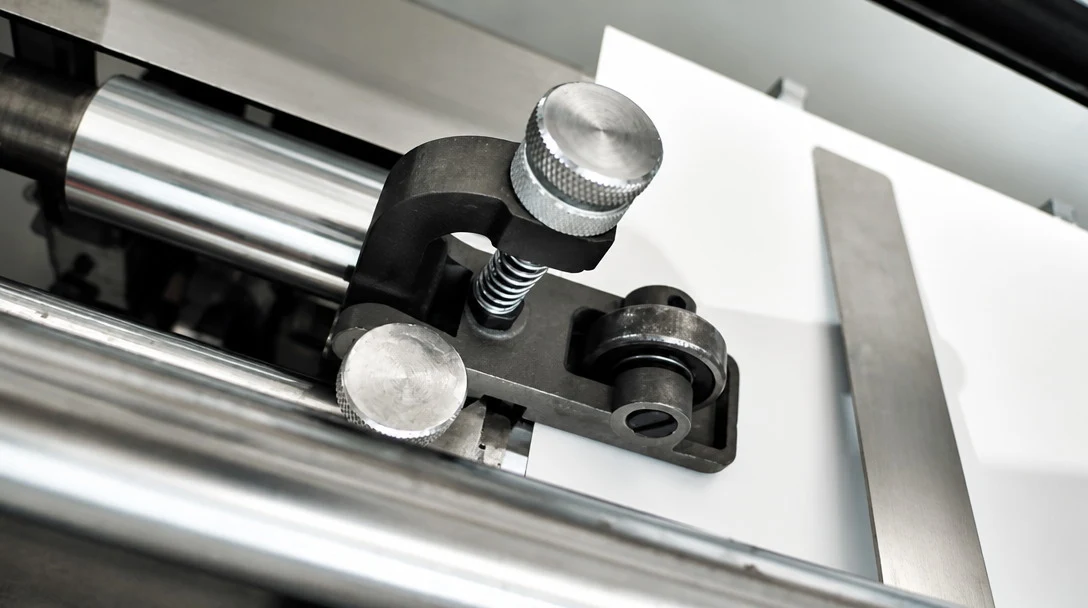
Inspect the starting condition safely
Make the press safe before inspecting areas where access could expose someone to crushing, hot tooling or stored energy. Use the manufacturer’s isolation and cooling procedure and the site’s authorized energy-control process. A stopped cycle or emergency stop is not automatically an isolated machine. The NIOSH hazardous energy control overview explains why servicing needs control of energy sources, rather than reliance on a normal stop command.
Once access is authorized, check the tooling identification, visible damage, clean mounting surfaces and approved support materials. Keep foreign objects and improvised packing out of the press. Record defects for a qualified technician. Do not scrape, loosen or adjust a hot assembly while it remains capable of moving. Close and verify the protection systems according to the manual before any authorized test cycle.
Establish a contact baseline
The starting objective is uniform, repeatable contact with the specified tooling stack. Follow the press maker’s proofing procedure; this article does not prescribe a blind-impression test, a particular packing hardness or a screw adjustment. Retain the first useful test samples and mark their orientation. Identify the operator side, leading edge and die position so that a weak area can be compared across subsequent trials.
Use the same stock orientation and controlled feed conditions while comparing contact. A pressure map that changes unpredictably from sheet to sheet calls for investigation of placement, support or material variation before local compensation. Stable weakness in one die area is a different observation from a whole image that moves relative to the print. The correction should follow the observed pattern, not the most convenient control on the panel.
Use this makeready release checklist
The following is a qualitative inspection aid, not a settings chart. It organizes observations for a documented trial. The Australian foil-stamping setup training unit treats setup, proofing and adjustment as related operator competencies; it does not supply a single production recipe for every machine.
| Check | Evidence to retain | Reason to stop release |
|---|---|---|
| Tool and artwork identity | Die ID against the current approved artwork | Wrong revision or damaged image area |
| Substrate and surface | Board batch and actual coating or laminate | Trial differs from the production surface |
| Contact consistency | Oriented samples from repeated stable cycles | Weak areas move unpredictably between sheets |
| Fine detail | Reference view of small text and narrow gaps | Coverage improves while counters close |
| Sheet positioning | Marked leading edge and print reference | Image position drifts beyond the agreed limit |
| Restart behavior | Samples after a documented controlled restart | Approved result cannot be reproduced |
Do not assign a pass merely because the last sample looks better than the first. The approved condition needs to be repeatable, with enough material reserved for a verification run. Keep rejected samples with their trial numbers so that the team can understand what each adjustment actually changed.
Separate temperature stabilization from pressure correction
Record the displayed temperature and the method used to confirm the process has stabilized under the manufacturer’s procedure. A controller reading does not, by itself, prove uniform temperature at every part of the die face. Where measurements are required, ask the supplier which instruments and safe measurement method are suitable. Avoid copying measurement techniques intended for another heating system.
Make one authorized change at a time, allow the specified response period, and retain a new sample set. If pressure, temperature and running speed all change together, a better sample does not identify the successful intervention. Excessive impression or loss of detail is a reason to reassess the preparation rather than simply increasing force again. Do not exceed the tooling, substrate or press limits to obtain coverage.
Compare solid areas and fine detail together
An artwork containing both broad solids and small lettering is a useful acceptance challenge because a condition that fills the solid may damage the detail. Agree which areas will be photographed and under what lighting before starting. Use the same magnification and viewing orientation for comparisons. Inspect the reverse side as well when the finished package must avoid visible impression marks.
An unambiguous approval sheet names the acceptable visual result without promising an unsupported numerical tolerance. If measurement is necessary, define the instrument, position and limit with the buyer and supplier. A photograph can document appearance but may conceal texture, gloss changes or shallow marking. Keep physical reference samples for disputes about these features and state which sample controls the decision.
Check foil advance and registration independently
Inspect used foil and finished sheets as separate evidence. The foil must present the intended unused area for each impression according to the approved setup. Repeated missing areas can involve foil presentation as well as contact, so compare the pattern before changing the die preparation. Adjustment of transport or release belongs to the specific machine instructions and authorized personnel.
Registration should be compared against a defined print or sheet datum. Record whether the first acceptable sheet remains representative after continuous running and after a normal restart. A stable image with poor edge definition requires different investigation from a sharp image that shifts position. For general defect classification, use the related hot foil stamping troubleshooting guide rather than expanding the makeready checklist into every possible foil fault.
Verify the condition under an agreed trial
After a promising setup is found, repeat the same documented condition without further adjustment. Select samples through the run, not only from the best moment. Include the planned stock range if different board finishes or coatings will be supplied. An acceptance trial on one material is evidence for that tested combination; it does not qualify every carton style or all future foil batches.
Record material consumption, setup steps requiring skilled intervention and the reason for any stoppage. These observations help compare quotations more fairly than a brochure speed alone. The buyer should distinguish preparation time from sustained running and from inspection time. Do not represent a brief demonstration as verified daily output, or treat a successful sample as proof that all operators can reproduce the process without training.
Keep the safety lesson part of the setup discussion
The following WorkSafeBC educational video covers guards and lockout in manufacturing. It supports the access-control discussion above; it does not demonstrate foil makeready or replace the press manual. The written checklist remains usable without the video. Playback depends on the viewer’s connection and platform availability.

WorkSafeBC: guards and lockout in manufacturing.
For the broader site workflow, the Realstar machinery blog is the nearest collection page. The cold foil adhesion testing article describes a different process route and should not be used as a hot-foil settings sheet. Keep the distinction explicit when customers compare finishing options.
Prepare a reproducible handover
Store the approved sample, rejected comparisons, material IDs, permitted setup record and inspection method together. Name the person who can authorize changes and the conditions that trigger a new proof. A replacement foil grade, different surface treatment or repaired die may require renewed approval. The aim is to preserve the tested combination so that a later operator can identify a meaningful change.
For an equipment inquiry, send representative production stock, the artwork, desired finish, expected batch sizes and the agreed sample criteria. Ask the supplier to state what was actually tested and which items remain unverified. This produces a useful trial report without inventing universal settings or claiming that a particular machine eliminates all preparation work.
Frequently asked questions
Should pressure be increased until all foil transfers?
No. Confirm the material combination, tooling condition and approved preparation first. Pressure changes must remain within the specific press and tooling limits, and improved coverage must be checked against fine-detail loss and unwanted impression.
Can a makeready record be reused for a different board finish?
Use it as a starting reference only where the manufacturer permits. A different coating, laminate or surface condition changes the tested combination and may require a new proof and approval.
Does a good first sample qualify the production run?
No. Retain repeated samples under the agreed stable condition and include restart checks where relevant. Approval should describe the tested material, process and inspection limits.